
Meet Kindred Core: Your Garden's Matchmaker
June 17, 2026 · 4 min read
Companion planting works. Carrots grow better beside onions. Marigolds protect tomatoes. Beans fix the nitrogen that hungry corn devours. But for every famous pairing that gardeners swear by, there are hundreds more that nobody's had time to test — and even the famous ones often work for reasons people get wrong.
That's the problem Kindred Core is built to solve. It's our companion planting matchmaker: a system that looks at every plant in our catalog and finds the combinations that will genuinely thrive together — not because of folklore, but because the underlying mechanisms are real. Complementary roots. Matching water needs. One plant recruiting the insects that keep the other's pests in check. Height differences that turn a potential shade conflict into a mutually beneficial canopy.
What are Kindred Species?
Every species in Garden Companion now has what we call Kindred Species — its two best matches. Think of them as the pairings we'd stake our reputation on. When you pull up any plant in the catalog, you'll see its Kindred Species highlighted front and centre: the combination that, across all the signals we measure, makes the most sense.
These aren't random suggestions. We look at root depth (do they share the soil without competing?), height and canopy shape (does one shade the other at exactly the right time?), water needs, nutrient strategies, and whether one of them actively attracts the predatory insects that keep the other's pests in check. The best pairs score well across multiple signals at once — and we're honest when a pairing has a known antagonism, too.
The lenses you can explore
Different gardens have different priorities, so we've built several ways to slice the data — all available on the Kindred Core page.
Kindred Plants is the full picture — every companion signal weighed together. This is the default view, and the one I'd start with.
Canopy Cousins focuses on height and sun. If you have a taller plant dominating one end of a bed, it finds the low-growing neighbours that appreciate a bit of afternoon shade rather than fighting for light.
Rootweavers is my personal favourite. It looks at root depth — shallow, medium, or deep — and finds the plants that share the subsoil without competing. A deep-rooted tomato and a shallow-rooted basil aren't fighting over the same inches. A nitrogen-fixing bean brings something entirely different to the bed than the crop growing beside it. Rootweavers makes all of that visible.
Kinship Clusters is for when you're designing a whole bed rather than a single pair. It finds groupings of three or more plants that are all mutual companions — every member gets along with every other. When you find a cluster that works, it becomes the backbone of a planting scheme you can return to year after year.
Mix & Match: start with curiosity
You don't need an existing garden bed to start exploring. The Mix & Match tool lets you pick any two plants and see how they score together — and why. It breaks down which signals are firing, what the strengths are, and where the tensions lie. I've spent more evenings than I'd like to admit just poking around in there.
A word on honesty
Companion planting has a long history of folklore — tips passed down through gardening books that turned out, on closer inspection, to rest on shakier ground than everyone assumed. We've been careful here. Every signal in Kindred Core is tied to a tangible mechanism: root interaction, insect recruitment, canopy geometry, nutrient exchange. If we can't point to a real reason, we don't score it.
That also means we flag the antagonists. Some plants simply don't get along — allelopathic chemicals, shared disease vectors, resource competition that neither side wins. Kindred Core shows you those too, dimmed and labelled, so you can make an informed decision rather than a pleasant-sounding one.
Companion planting done well is one of the quiet joys of gardening. I hope Kindred Core helps you find more of those combinations that just work.
— Pernille
About the author
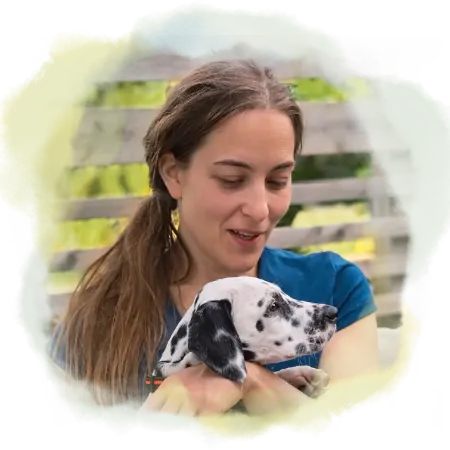
Pernille has spent almost her entire adult life working in gardens, both personally in her own gardens, as well as professionally. She has worked at Arley Hall & Gardens, at Systrarna Lindskogs in the Swedish riviera of Österlen and spends most of her waking hours planning gardens, counting seeds and thinking 3 seasons ahead (at least). She is also the founder and creator of Garden Kinship.