Gratis trädgårdsplanerare — spara växter, planera rabatter och få såpåminnelser för din plats.
Skapa konto gratisKinship Core
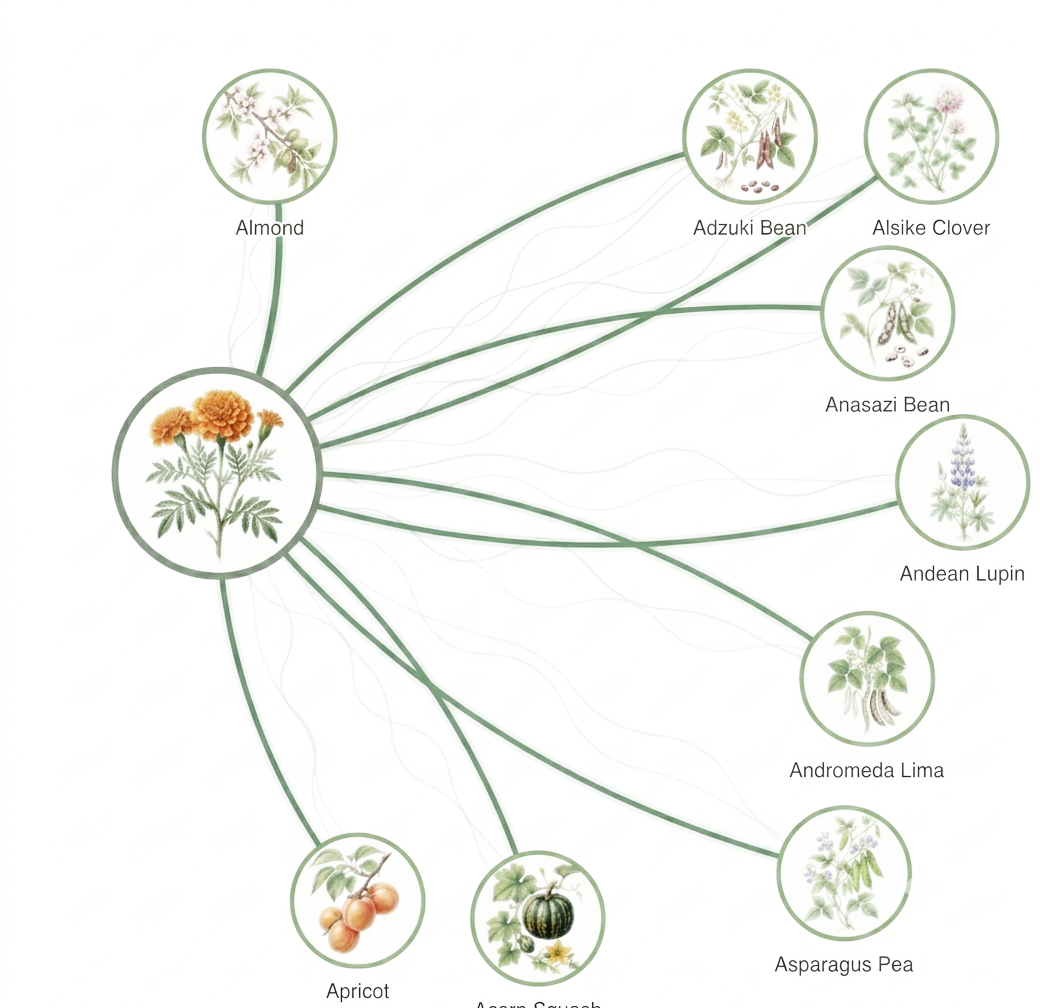
Garden Kinships matchmaker. Den parar växter som naturen gör — genom skadedjursbiologi, rotarkitektur, blomtid och skugga — inte för att mormors almanacka sa det. Varje band är spårbart. Inget är påhittat.


Vad det är
Guider för samplantering ser oftast ut som kalkylblad — "tomaten gillar basilika, ogillar kålväxter" — kopierade mellan webbplatser i decennier utan att någon kontrollerat. Kinship Core tar ett annat grepp: den modellerar de faktiska mekanismerna (ett nyttoinsekt, ett överlapp i jordlager, en skuggeffekt) och låter paren växa fram ur dem. När den underliggande forskningen uppdateras, uppdateras hela nätet med den.
Tap to bloom · hold for info
982 arter · 432 främsta släktskapsband visade · direkt från katalogen

Skadedjursbiologi
Varje skadedjursavvisande par spåras tillbaka till dokumenterat insektsbeteende — vilken nyttopredator varje skadedjur lockar, vilka flyktiga ämnen som förvirrar äggläggning, vilka fångstgrödor som lockar bladlöss bort.

Rotvetenskap
Djup, spridning och exudatprofiler avgör om två växter delar eller konkurrerar om samma jordlager. Djupa pålrötter parade med grunda matare, kvävefixerare intill kvävehungriga växter — bara när biologin stämmer.

Pollinatörstöd
Överlapp i blomtid, nektartillgänglighet och vilka insektsfamiljer en blomma faktiskt matar — inte bara "lockar bin" som en bred etikett. Specifika bin, blomflugor, parasitoida steklar.

Skugga, skydd, täckning
Skadedjursbiologi
Rotvetenskap
Pollinatörstöd
Skugga, skydd, täckning
Varför vi byggde det
De klassiska påståendena — "ringblommor håller bort allt", "plantera aldrig morötter nära tomater", "basilika räddar din basilika" — lever kvar för att de låter rimliga och ingen förlorar något på att upprepa dem. En del stämmer. Många gör det inte. Några är raka motsatsen. Ingen håller räkning.
Beprövade system som De tre systrarna förtjänar sin plats på annan grund: inte en mekanism, utan ett helt mikroklimat av dem — majsen som spaljé, squashen som levande marktäckning, bönorna som ett långsamt kvävebidrag under nästa säsong. Core respekterar sådana system och modellerar de delar den kan verifiera.
Vi ville ha ett verktyg som riktiga trädgårdsmästare faktiskt kunde lita på — utan att behöva ta en doktorsexamen i entomologi först. Så vi byggde ett där varje band har en dokumenterad mekanism — ett insekt namngivet, en studie citerad, en rotprofil jämförd — och ett säkerhetsstängsel som vägrar skicka ett band utan en. Om bevisen är svaga finns bandet inte. Om de är starka är det permanent tills något bättre dyker upp.
Resultatet är ett mindre, sturdigt nät jämfört med vilken folkförteckning som helst — och ett som växer varje gång den underliggande forskningen gör det.
Styrkor

Varje påstående om varför två arter paras har en citerbar källa. Ett säkerhetsstängsel i byggpipelinen avvisar allt utan en — tröskeln för att skicka ett nytt band är verkliga bevis, inte samstämmig folklore.

Samma indata ger alltid samma matchningar. Konstellationen du ser på startsidan är densamma som ett nedströms API-anrop skulle producera — ingen dold slumpmässighet, ingen drift.

Härdlighetszoner, frostdatum och lägsta tolererade temperaturer styr varje rekommendation. Core föreslår aldrig en tropisk följeslagare till en Stockholmsträdgårdsmästare.
Hur du använder det

Välj ut några favoriter för hand och låt Core föreslå vilka som passar in. Klimatanpassad, avsiktsmedveten, redo att plantera.

Öppna vilken artssida som helst för att se vem den älskar, vem den tolererar och den exakta mekanismen bakom varje band.

Planera rabatter där varje granne förtjänar sin plats. Visuell layout med samma motor i ryggen — inga tvivel.
Börja med en art du älskar. Core hittar vem som hör hemma bredvid den — förtjänat av biologin, inte av någon farbrors envishet.
Arkitektoniska par: höga arter som skyddar känsliga underväxter, krypande täckväxter som stabiliserar markfukt, levande marktäckning som håller ogrästrycket lågt. Kalibrerat efter kronans täthet och tillväxttakt, inte magkänsla.

Kinship Core är ett delat bibliotek under Mix & Match, Designer, katalogen och planeraren. En enda sanningskälla för varje del av Garden Kinship som rör relationer.