

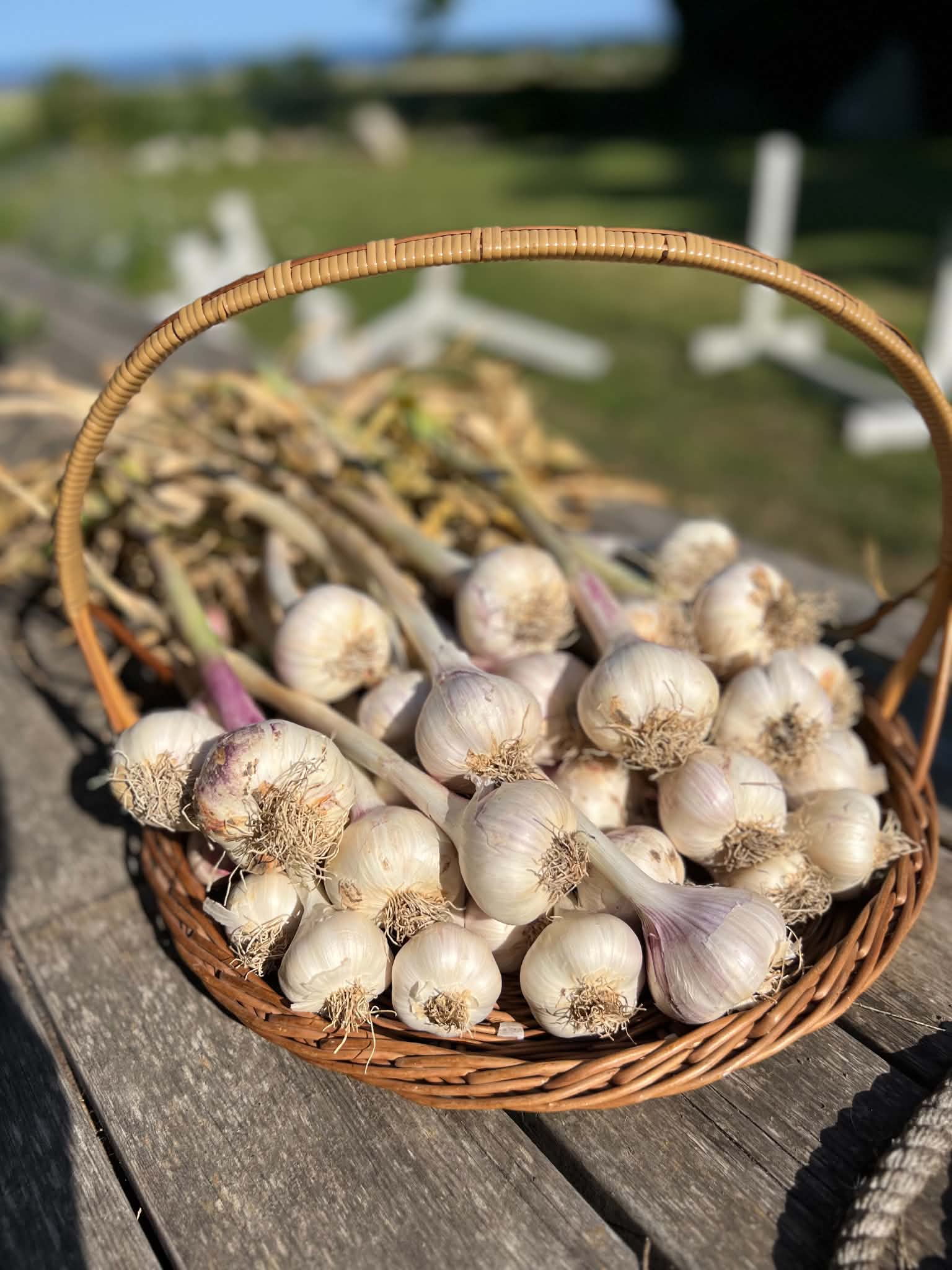

Garlic time!

July 21, 2026 · 4 min read
Garlic!
My must have nr 2!
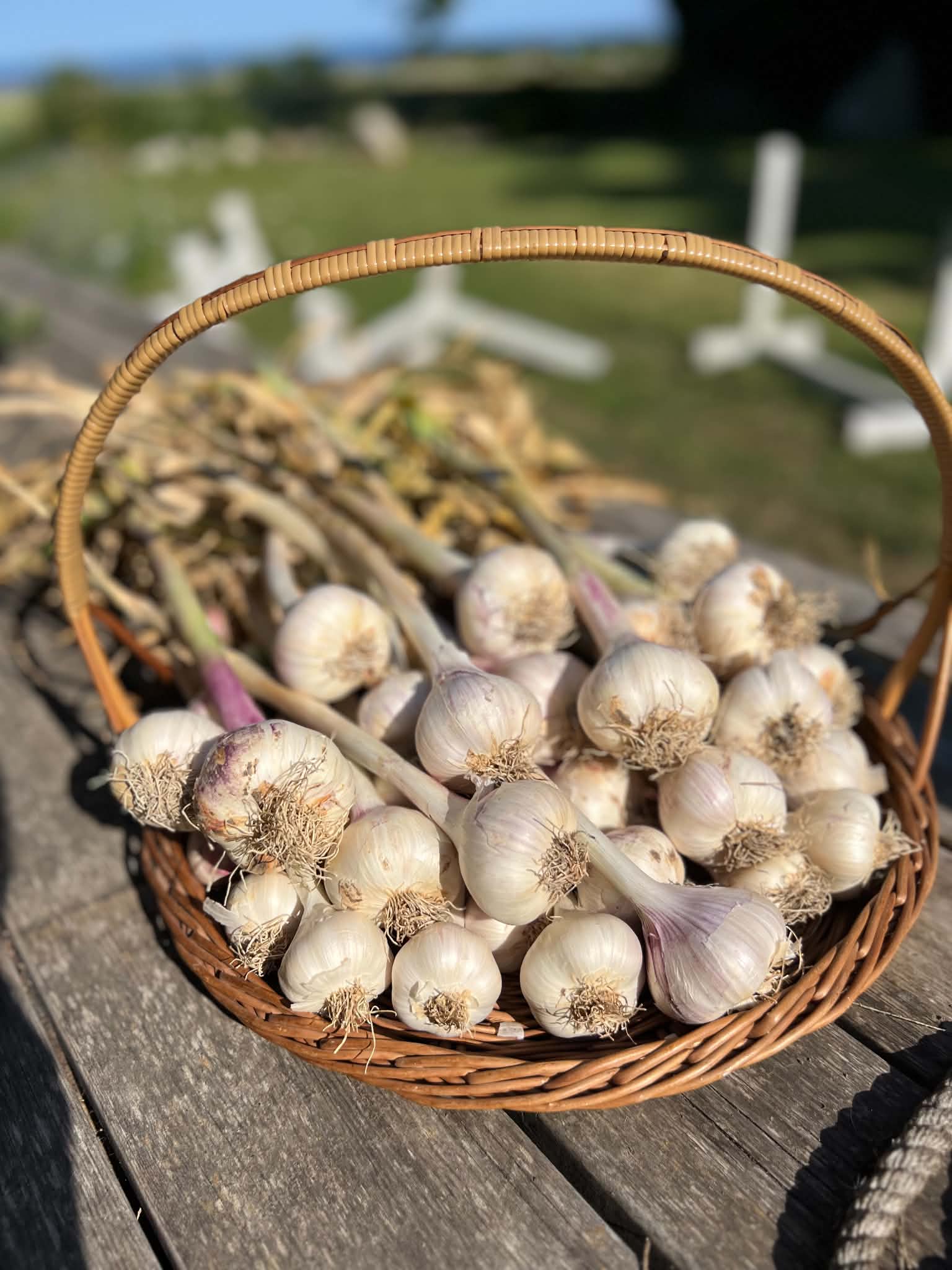
A must in my kitchen garden is Garlic. We use garlic in nearly all food, from pasta sauce and salad dressing to steak dinner and dip for chips. And it is super easy to grow!
The Harvest!
It all actually starts when I harvest garlic. I choose the garlic with the biggest cloves to plant in the autumn for next year's harvest. This way I am making sure that most of the harvest becomes big cloves. If I would choose only the small ones, as is easy to do since we want the big ones in the kitchen, I am risking getting smaller and smaller cloves each year. So we need to “sacrifice” some of the big ones for the greater good!
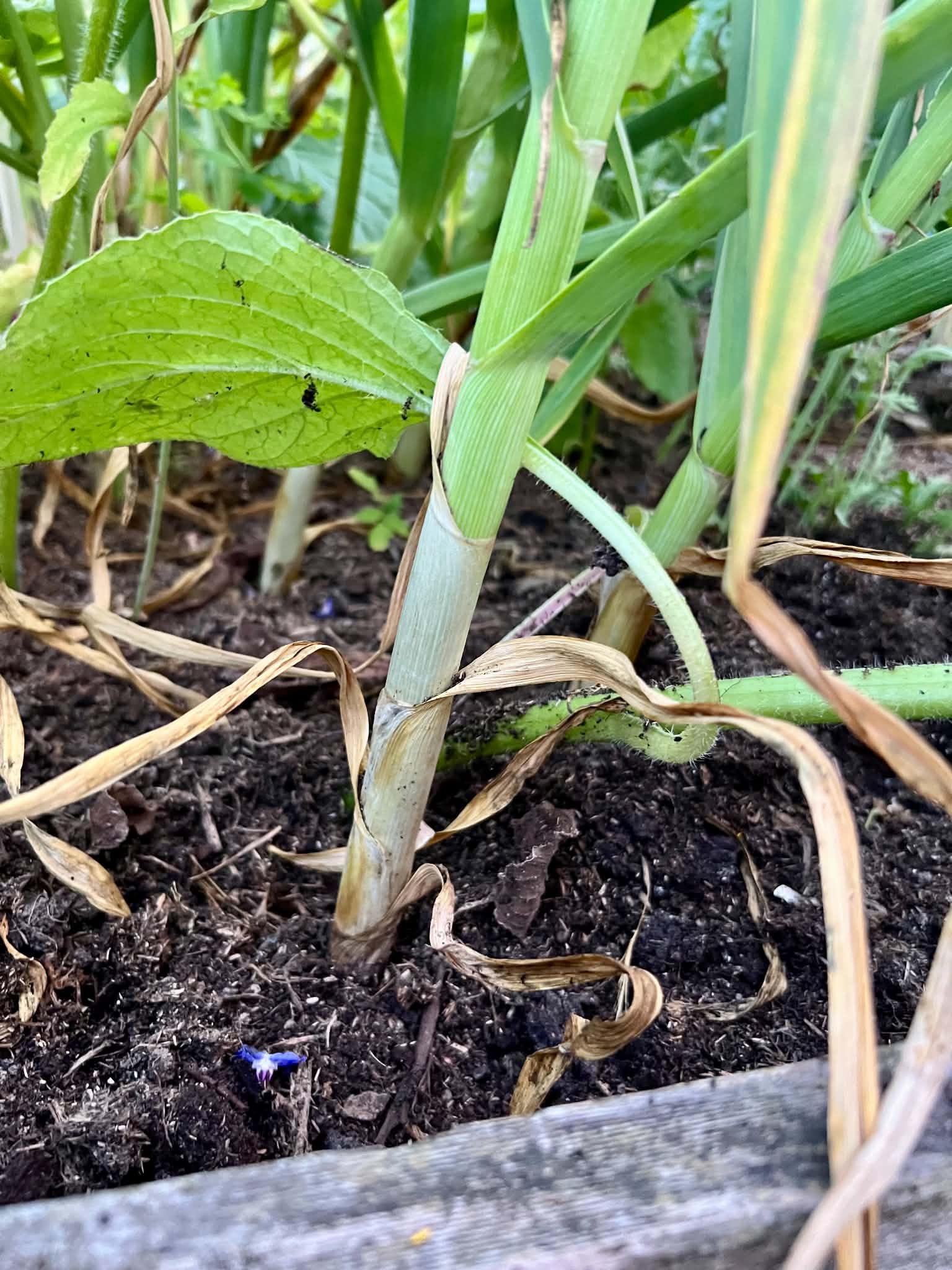
I start the harvesting in mid July, when the three lowest leaves have dried. I take a hand shovel to loosen the soil on one side of the bulb, then genlty pulling it up with a loos hand.
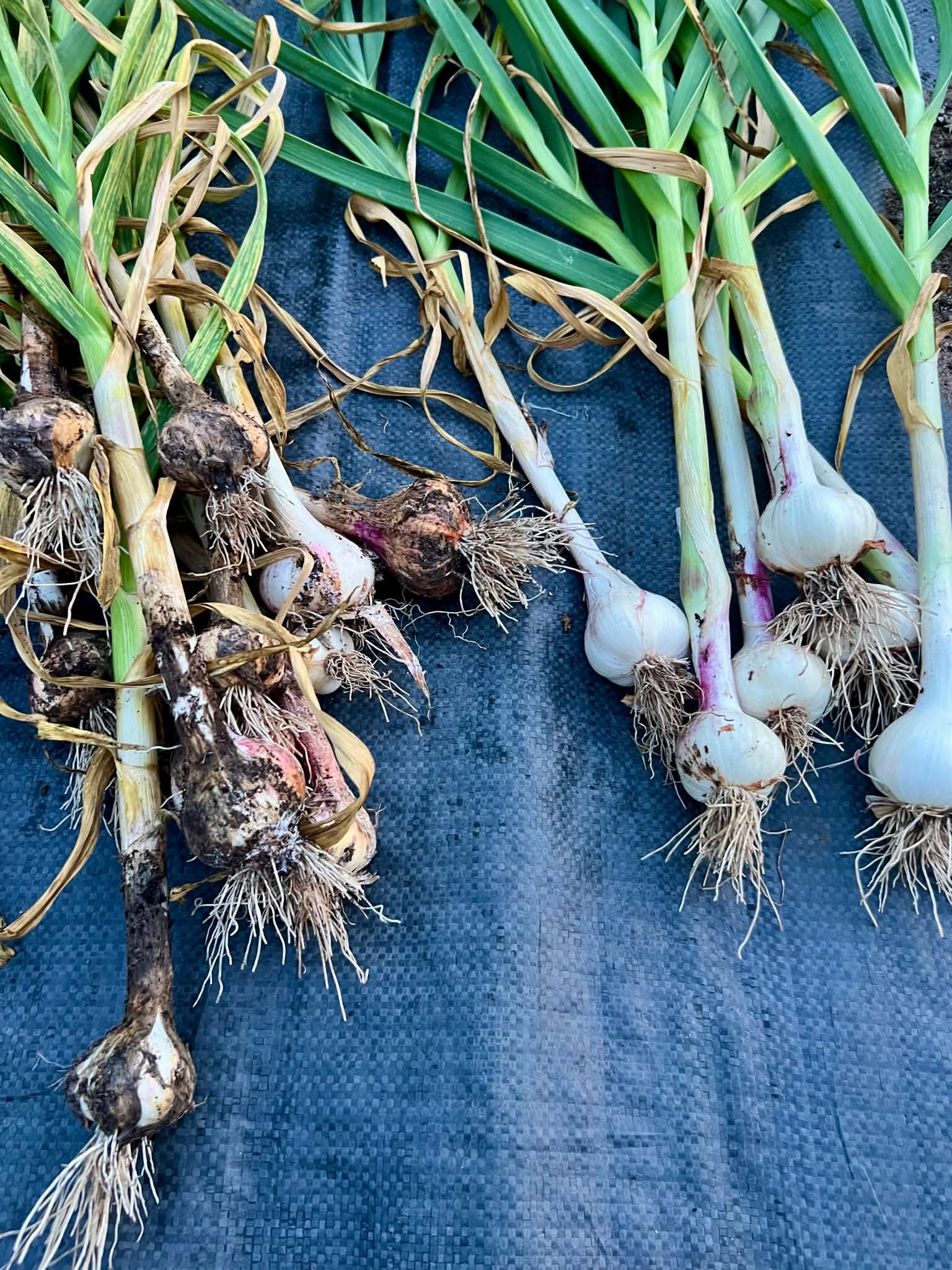
Once up, I gently remove the soil left on them and then let them dry a bit, 2-3 days, in an ary dry place.
I tend to dry them outdoors if there is no rain on the way.
After the first drying, I pull off the first dried layers, so that the garlic is white (or pink depending on variety) and clean. After this I hang them to dry well for storage. I dry (cure) mine hanging upp sid down on a netframe I made, But it´s easy and well enough to just tilt a pallet or a nett of any kind leaning on the wall. Let them dry for 2-3 weeks then I cut the stems nearly all the way down to the cloves and cut off all the roots (carfully not to damage the cloves).
Then store them in a dry, dark and cool place. If I have a lot of garlick, I keep some in a dry storage and some I peel and freeze in an airtight container. You can also grind/chop them and add the amount you normaly use for cooking in an ice cube tray and add a bit of water. Perfect to just add to your cooking.
Planting!
Here in Sweden I start the Garlic season the weekend nearest to the October/November change. At that time the soil is cool enough for them not to start growing too much, but still warm enough for them to set root to start a little growth.
I start by adding cow manure (or any compost you have available) and mixing it in by digging and turning the soil, this also makes the soil loosen and easier to plant and easier for the garlic to set root. I plant the cloves in offset rows, where the cloves are abot 10 cm apart. Then I leave them there over winter. In the spring I might add a litle more cowsmanure on top of the soil. Then I leave them, till harvest, weeding them from time to time, and give them water when it is dry.
Companion plants!
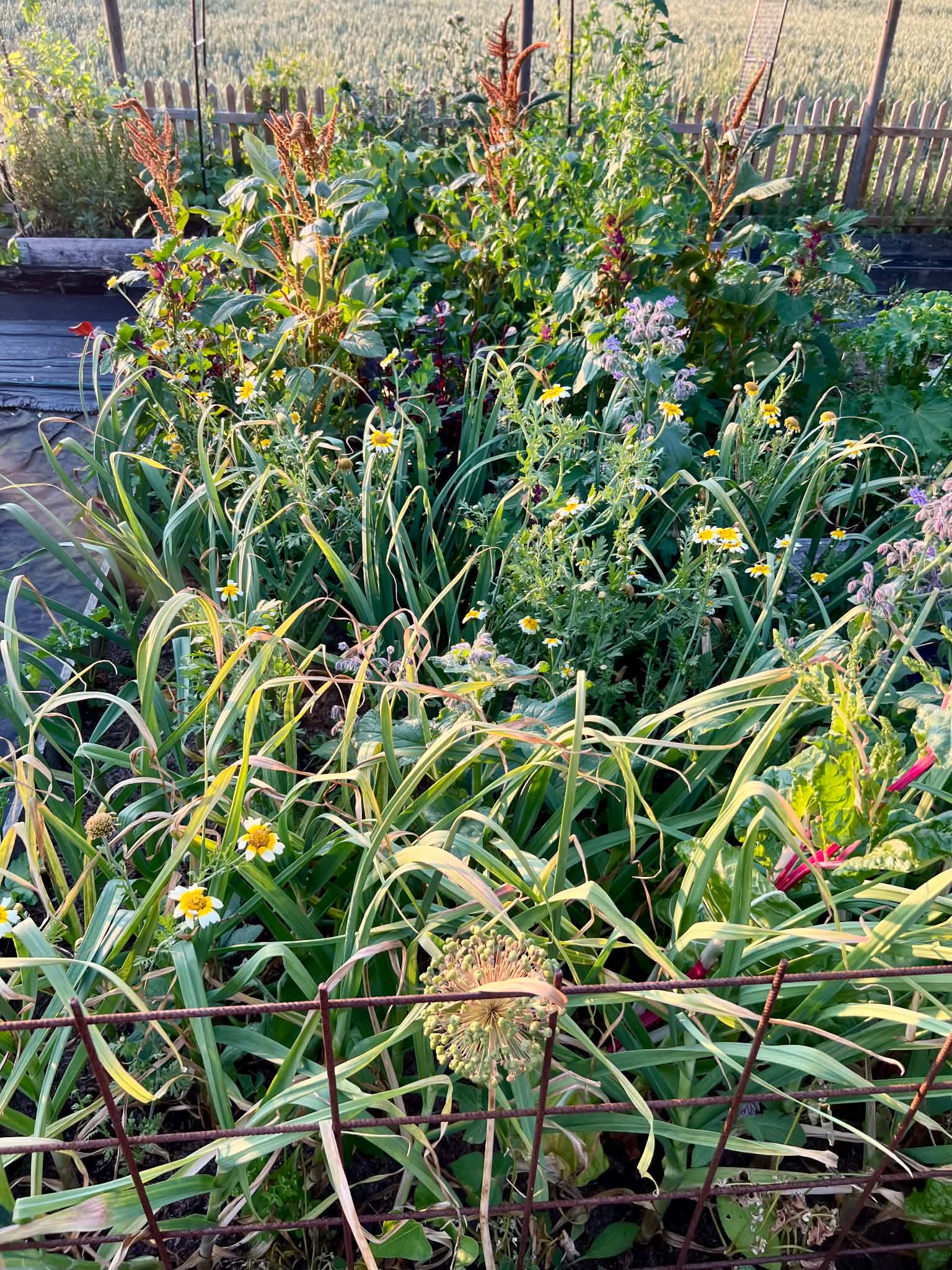
This summer I planted Shungiku betweene Therador. This worked well and the suncoloured flowers of the Shungiku gave a nice detail among the Garlic leaves.
Betweene the Sabadrome garlic I sowed Borage, the garlic was completely hidden in the borage leaves, but the garlic managed this well.
The Shungiku and Borage are both exelents sallad and decore crops.
Last year I planted kale with the galic, this worked well and next year im going to plant tomatoes with the garlic.
Varieties
Se some of the fine varieties there is here https://www.gardenkinship.com/en/search?q=garlic , what kinds you can get is depending on where you live and what the gardencenter/plantfair sells.
I am still trying different varieties of garlic to find the best for my family, but I tend to always grow Sabadrome. Beautiful big cloves with a some what milde and rounded garlic taste.
This year I am trying Therador. Will see how that turns out once I have harvested.
About the author
Pernille has spent almost her entire adult life working in gardens, both personally in her own gardens, as well as professionally. She has worked at Arley Hall & Gardens, at Systrarna Lindskogs in the Swedish riviera of Österlen and spends most of her waking hours planning gardens, counting seeds and thinking 3 seasons ahead (at least). She is also the founder and creator of Garden Kinship.
Continue reading
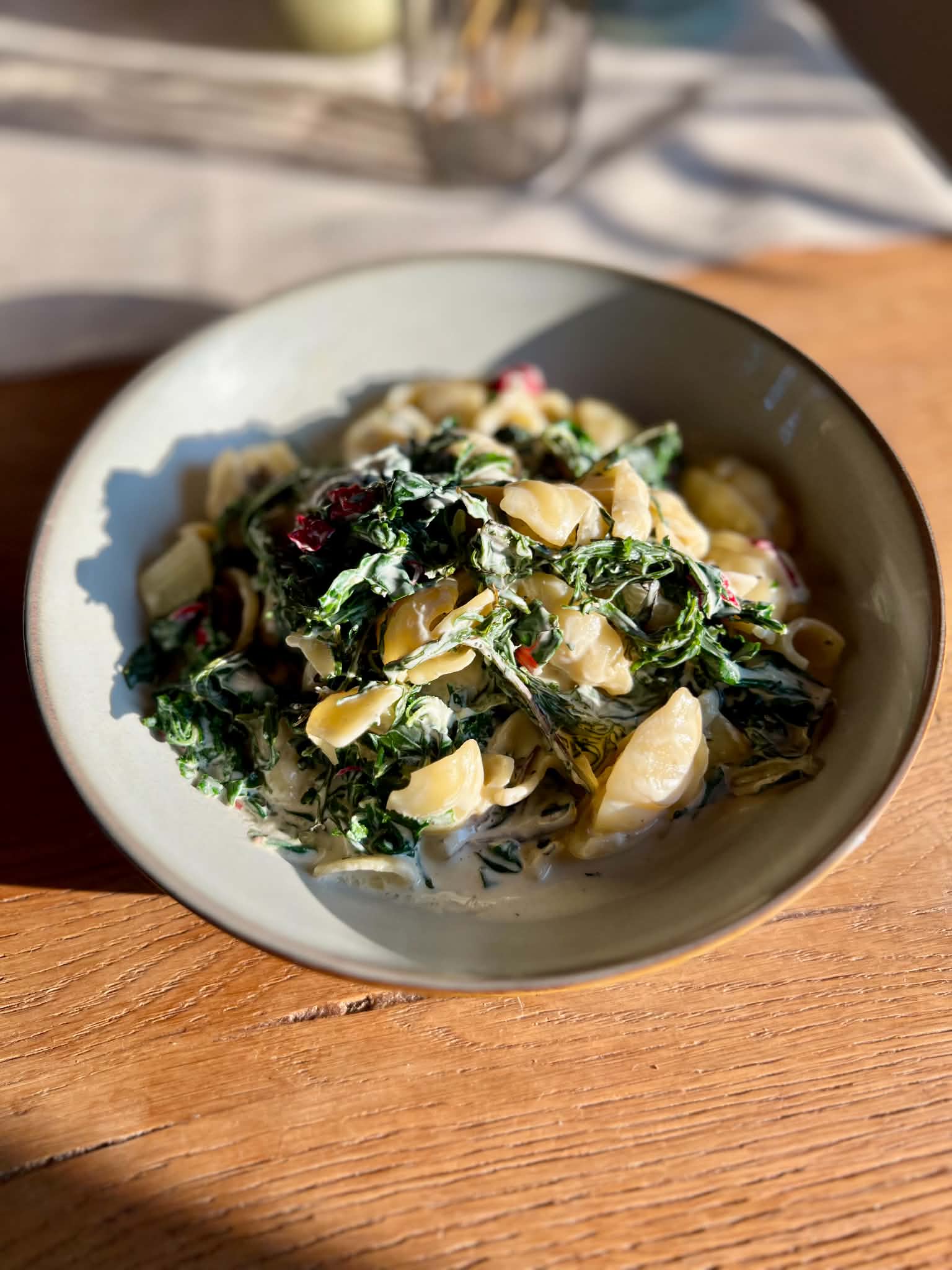
Eat your greens!
I like to collect odd and unusual edible plants (for Sweden at least). Both annual and herbaceous. Along the way I try to learn how to use them to the fullest and the kitchengarden is bursting with all the glorious vege as we speek.
Pernille Roos · Aug 10, 2026
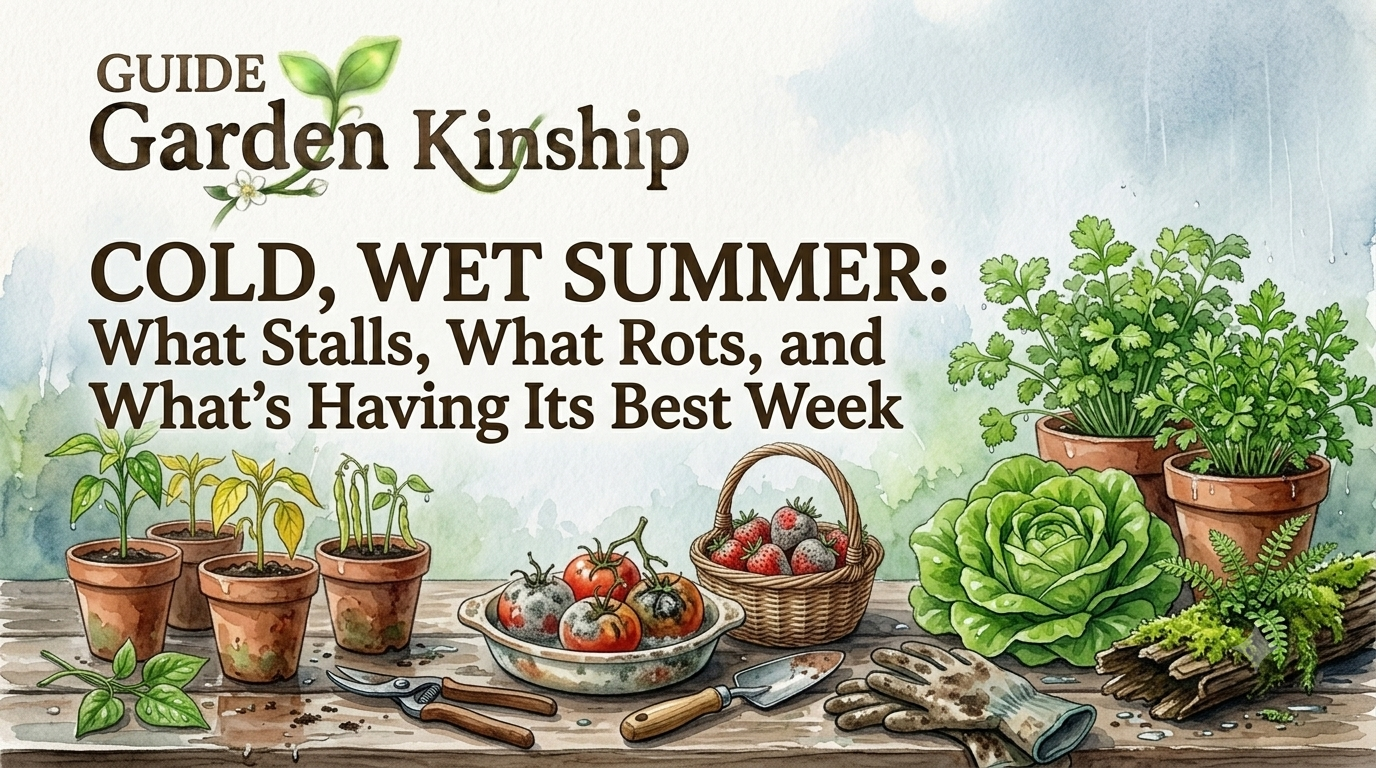
Cold, Wet Summer: What Stalls, What Rots, and What's Having Its Best Week
A grey fortnight in the middle of summer feels like a disaster and mostly is not one. Almost everything you are looking at is paused rather than dying. But three things are genuinely rotting, one creature is having the week of its life, and the single most damaging thing you can do is the thing that feels most productive.
Pernille Roos · Jul 22, 2026
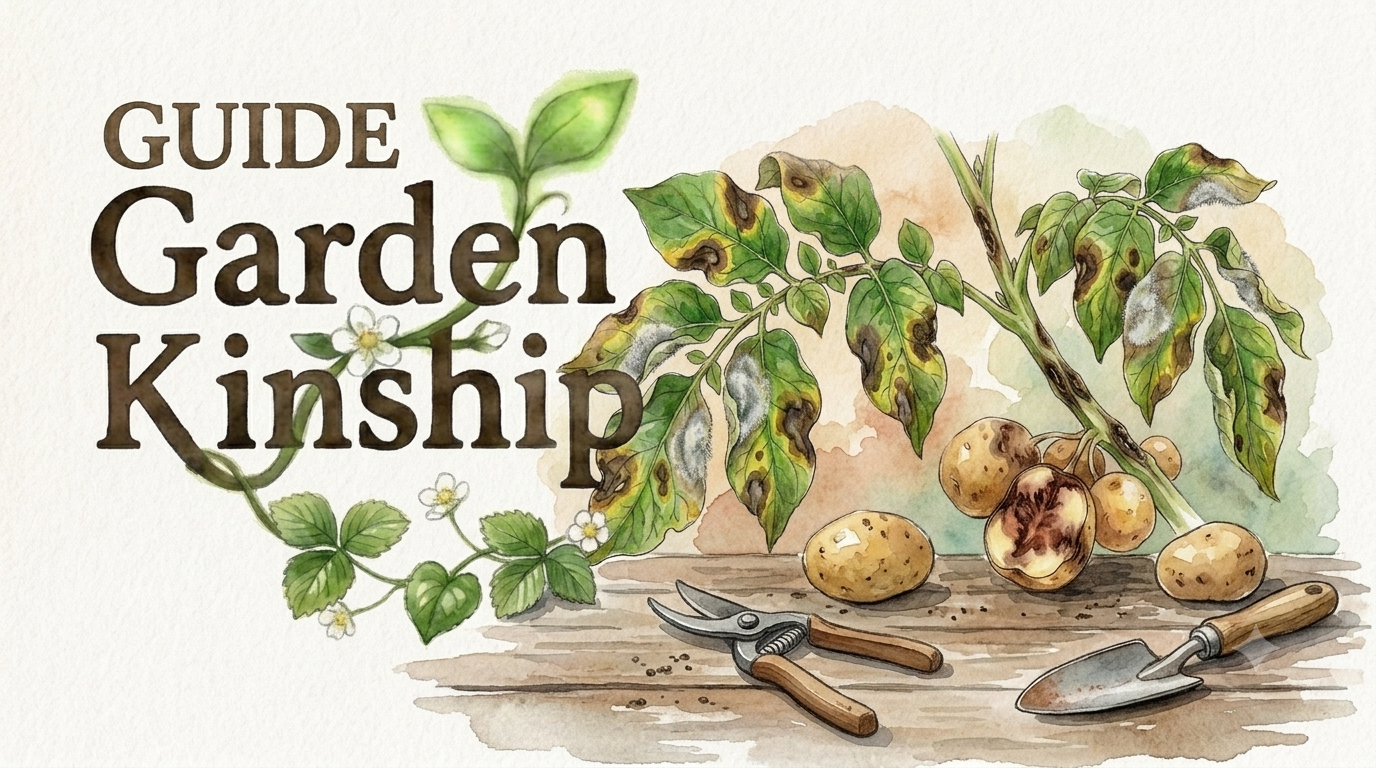
Late Blight: How to Spot It, and What to Do the Day You Do
Most garden problems give you a season to think about them. Late blight gives you about ten days. It arrives on the wind in the muggy end of July, and the difference between losing a crop and saving most of it is usually whether you recognised it on the first morning or the fourth.
Pernille Roos · Jul 20, 2026