



Growing Beans: Bush or Pole, Snap or Dry

July 17, 2026 · 8 min read
Beans get handed to beginners as the easy crop, and they mostly deserve it: they germinate fast, they grow hard, and they'll forgive you a lot. But "bean" isn't one plant behaving one way. It's a handful of different species with different habits and different endings, and almost everything you'll do for them follows from two questions you answer before the seed goes in the ground: how tall does this one get, and are you eating the pod or the seed? Answer those two and the rest of the season more or less tells you what to do. Guess at them, and you'll be building supports for a plant that doesn't want one, or waiting on a pod that was ready three weeks ago.
The two questions
The first is bush or pole, and it's the fork that decides your whole layout.
Bush beans stop at knee height — call it 45 to 60cm — and need no support at all. They flower and set over a short window, hand you a concentrated flush, and then they're largely done. That's not a flaw; it's a feature if you want a pickable crop all at once, or if you're sowing in succession every few weeks to keep beans coming. Red Swan, Processor, French Filet and Perssons Buskböna all sit in this camp.
Pole beans climb — properly climb, two to three metres — and keep flowering and setting for as long as you keep picking and the weather holds. They need a support in the ground before you sow, they out-yield bush beans per square metre by some distance, and they pick standing up instead of crouching. Neckar Gold, Romano, Rattlesnake and Lazy Housewife want a frame.
The second question is snap or dry, and it decides when you pick and what you get.
Snap beans (green beans, wax beans, filet beans) are grown for the pod, picked young and tender while the seeds inside are still barely bumps. They're quick — often ready in 55 to 65 days.
Drying beans are grown for the seed, left on the plant until the pod is papery and rattles. They're a longer commitment — usually 90 to 100 days — and they ask you to do nothing for weeks while the pods look, to an anxious eye, like they're going to waste. Black Bean, Kidney, Borlotti, Cannellini and Yin & Yang are all seed crops.
The two questions are independent — you can have a bush drying bean or a pole snap bean — which is exactly why it's worth checking your specific variety rather than reasoning from the word on the packet. Every bean in the catalog lists its height and its days to maturity, and those two numbers answer both questions before you commit a square metre to it.
Sowing: wait for warm soil, then sow where they'll stay
Here's where beans differ from the tomatoes and chilies you may have been nursing on a windowsill since February. Don't start beans indoors if you can avoid it. They come up fast and they resent root disturbance, so the weeks you'd spend raising transplants mostly buy you a checked plant. Sow them where they're going to grow.
What they will not forgive is cold, wet soil. A bean seed sitting in it doesn't wait — it rots. Wait until the soil is genuinely warm and frost is done; roughly 12–15°C is the threshold below which you're gambling. Sow two or three centimetres deep, water once, and then mostly leave them be until they're up. If you garden somewhere short-seasoned and you're impatient, the honest fix isn't sowing earlier, it's warming the soil first or choosing a faster variety — work back from your own frost dates in the planner rather than a generic date off a packet.
One caveat on the climbers: get the support in before you sow, not after. Driving canes in around established roots is a good way to damage the plants you're trying to help.
The feeding mistake
Beans make their own nitrogen. Not by magic — through a partnership with Rhizobium bacteria in nodules on their roots, which pull nitrogen out of the air and hand it to the plant. Every bean in this catalog does it.
Which means the instinct to feed them well is the instinct to ruin them. Pour nitrogen on a bean and you get a magnificent leafy plant carrying almost no pods. It has no reason to make seed when it's being handed everything it needs to keep making leaves. Beans want decent, free-draining soil that isn't freshly manured, steady moisture while they're flowering and filling pods, and otherwise your restraint. If you feed at all, feed for fruiting, not for growth — the same logic as a tomato, arrived at from the opposite direction.
It's worth being precise about the flip side too, because beans get oversold as a soil fix. They do fix nitrogen, but most of it ends up in the seed — and the seed is the thing you carry off to the kitchen. The soil benefit is real but modest, and you only really collect it if you leave the roots in the ground when you clear the plants, rather than yanking them. That's a small habit with a genuine payoff, and it's most of what the companion planting claims about beans actually rest on.
Watering, and one thing not to do
Beans are reasonably drought-tough until they start flowering, and then they aren't. Water matters most during flowering and pod-fill — drought stress at that moment is the classic cause of flowers dropping and pods filling unevenly. Water the soil rather than the plant, and mulch to keep it steady.
The one thing not to do: don't work among bean plants while they're wet. Bean rust and anthracnose spread on contact with wet foliage, and brushing down a soaked row picking beans is one of the most efficient ways to move disease from one plant to every plant. Wait until the leaves have dried off.
Picking, which is also a way of asking for more
For snap beans, picking is not just harvest — it's the whole management strategy. The plant's goal is seed. Every pod you let mature and go lumpy is a pod that tells the plant it's finished, and production slows accordingly. Pick young, pick often, pick even the ones you don't need. A pole bean picked over consistently will keep going for weeks longer than one left to set a few big pods.
Drying beans ask for the exact opposite: patience. Leave them alone. The pods go from green to yellow to brittle and papery, and the beans rattle inside when you shake them. That's the signal. Pull the plants when the pods are dry (leaving the roots, as above), and if the weather turns wet before they're finished, bring the whole plant under cover to finish drying rather than letting the pods mould in the rain. Even after the pods rattle, spread the shelled beans out for a couple of weeks before storing — a bean that seems dry and isn't will spoil the jar it's stored in.
Beyond the common bean
Most of what's above is Phaseolus vulgaris, the common bean. A few of its relatives play by adjusted rules and are worth knowing:
Runner beans (Runner Bean, Painted Lady, Sunset) are a different species, P. coccineus, and they're the pick for cool, damp summers — they're happier in exactly the weather common beans grumble about, though they set pods poorly in real heat. They're also frankly ornamental in flower, which is not nothing on a fence line.
Lima and butter beans (Christmas Lima, Butter Bean) want a long, warm season. In a short one they're a gamble rather than a crop — check the days to maturity against your own frost dates before committing.
Tepary beans (Tepary) come out of the Sonoran desert and are built for drought and heat. If your problem is a hot dry corner where nothing sets, this is the bean to try there.
Broad beans, incidentally, aren't in this family at all — Vicia faba is a different plant with an opposite calendar, sown into cold ground when common beans would rot. Peas aren't beans either. Both deserve their own guide.
The best reason to grow beans
Save the seed. It's the quiet argument for beans over almost anything else: the crop and the seed are the same object, drying beans are self-pollinating enough to come true year after year, and the whole thing costs you nothing but a jar. That's how a bean called Perssons Buskböna stays alive in Simrishamn, and how varieties like Mbombo, Lilac Trout and Skunk get passed hand to hand instead of quietly disappearing. If you want to see where that road leads, I wrote about my own bean bonanza and the trays it takes to keep it going.
So: check the height, check the days to maturity, get the support in before you sow, wait for warm soil, don't feed them, and pick like you mean it. Find your variety's real numbers in the catalog and plan the sowing against your own season in the planner.
— Pernille
About the author
Pernille has spent almost her entire adult life working in gardens, both personally in her own gardens, as well as professionally. She has worked at Arley Hall & Gardens, at Systrarna Lindskogs in the Swedish riviera of Österlen and spends most of her waking hours planning gardens, counting seeds and thinking 3 seasons ahead (at least). She is also the founder and creator of Garden Kinship.
Continue reading
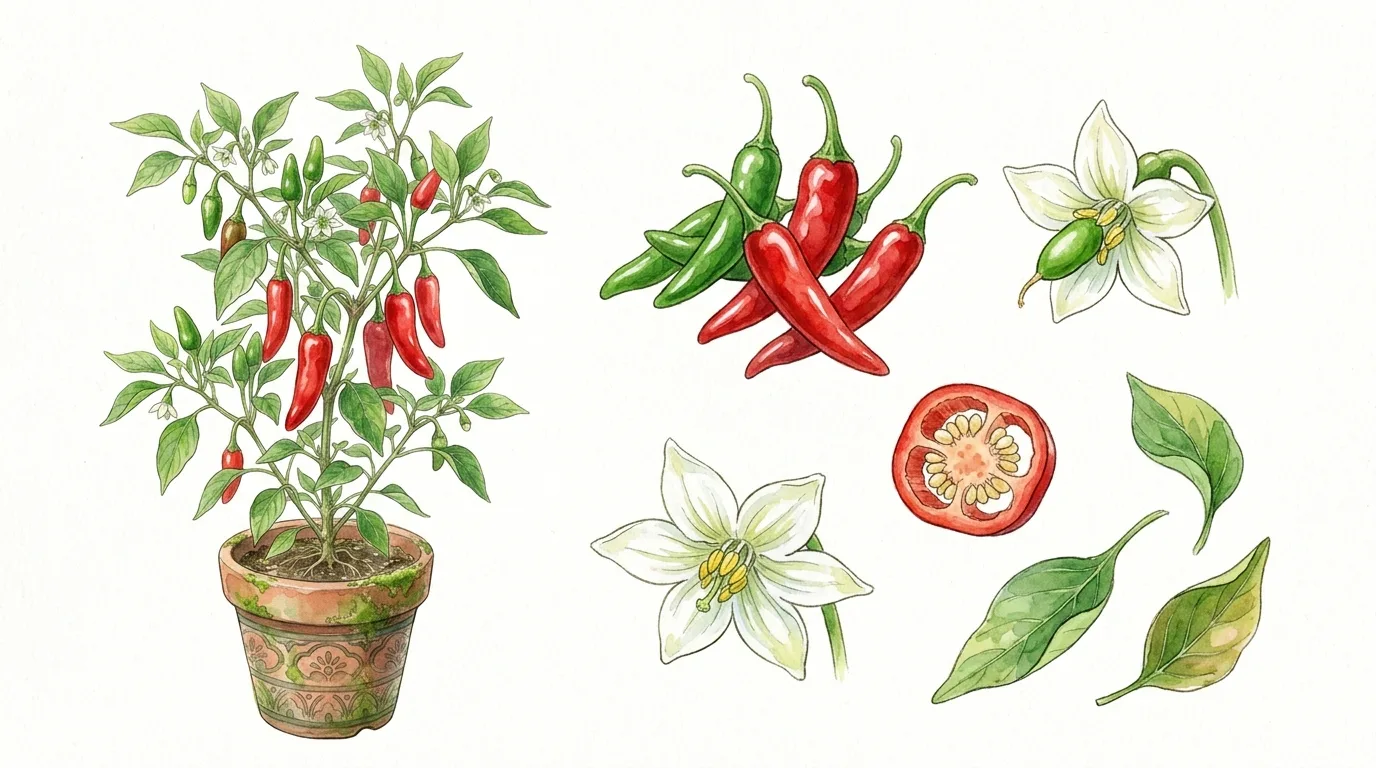
Pruning Chili Plants: When It Helps, and When to Leave Them Alone
Chilies don’t need pruning to crop — but three simple cuts, made for the right reason at the right time, can mean a bushier plant, more fruit, and cleaner ripening. Here’s when to reach for the scissors, and when to sit on your hands.
Pernille Roos · Jul 14, 2026
Your First Vegetable Garden: Start Smaller Than You Think
The most common way a first garden fails is being too big. Here is how to plant less, grow more, and actually enjoy your first season.
Pernille Roos · Jul 14, 2026
Growing Tomatoes: From First Sowing to the Last Ripe Fruit
Tomatoes are the crop most gardeners fall for first — and the one that most rewards getting the timing right. This is the whole arc: sowing, planting out, the one pruning decision that actually matters, keeping them fed and even, and coaxing the last fruit to colour before the cold.
Pernille Roos · Jul 14, 2026