

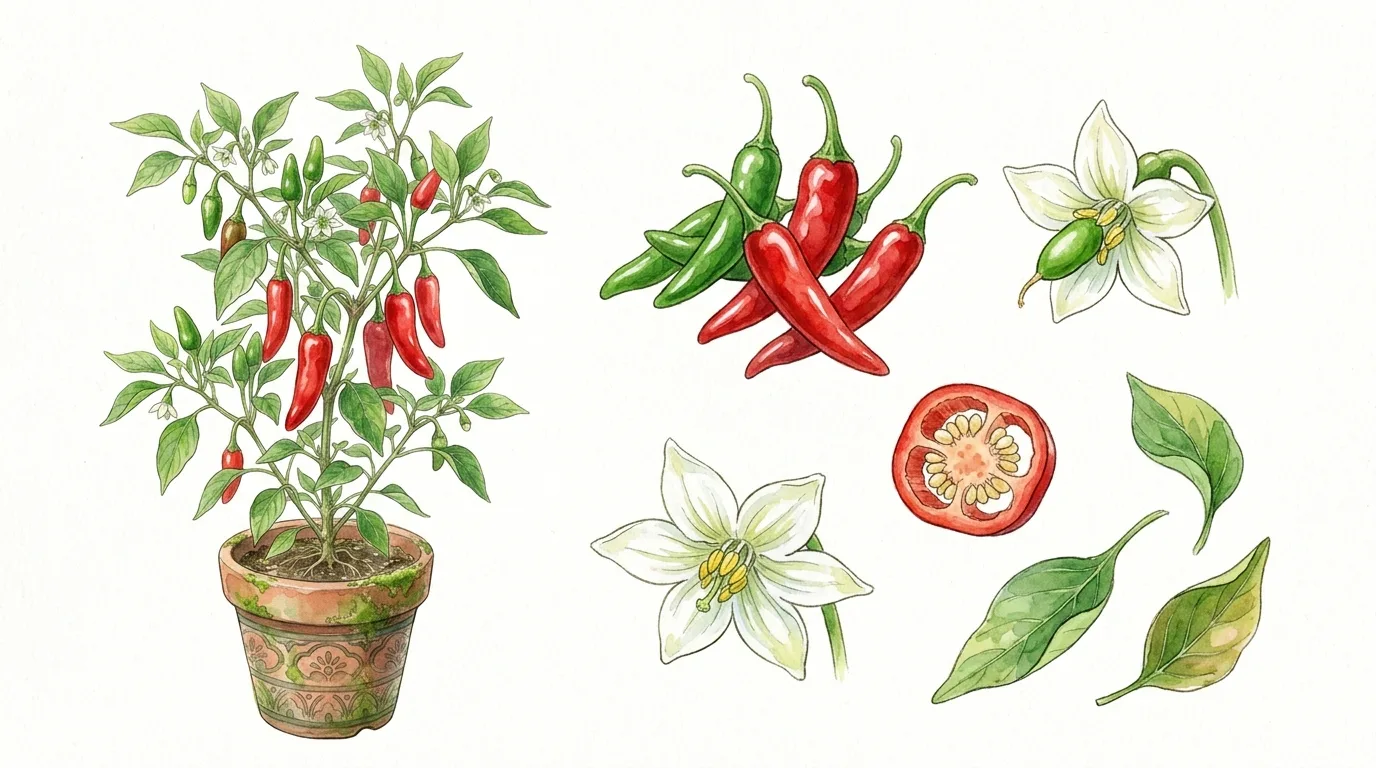

Pruning Chili Plants: When It Helps, and When to Leave Them Alone

July 14, 2026 · 6 min read
Let's clear one thing up before you pick up the scissors: a chili plant does not need pruning to give you chilies. Left entirely alone, a healthy plant in enough sun and warmth will flower, set fruit, and ripen a perfectly good crop. Pruning is not maintenance you owe the plant — it's a set of deliberate trade-offs you make for a specific payoff. Do it for a reason and it helps. Do it out of habit, or because you saw someone online do it, and you can just as easily set your harvest back. So this guide is really about three cuts, what each one buys you, and — just as important — when to leave the plant alone.
The single thing that decides all of it is how long your season is. A cut that pays off over a long, warm summer is a cut that can quietly cost you your whole crop in a short one, because chilies are slow: from flower to ripe fruit is weeks, and anything that delays the plant eats into a window you may not have to spare. Keep that in the back of your mind for every technique below.
Topping: trading early fruit for a bushier plant
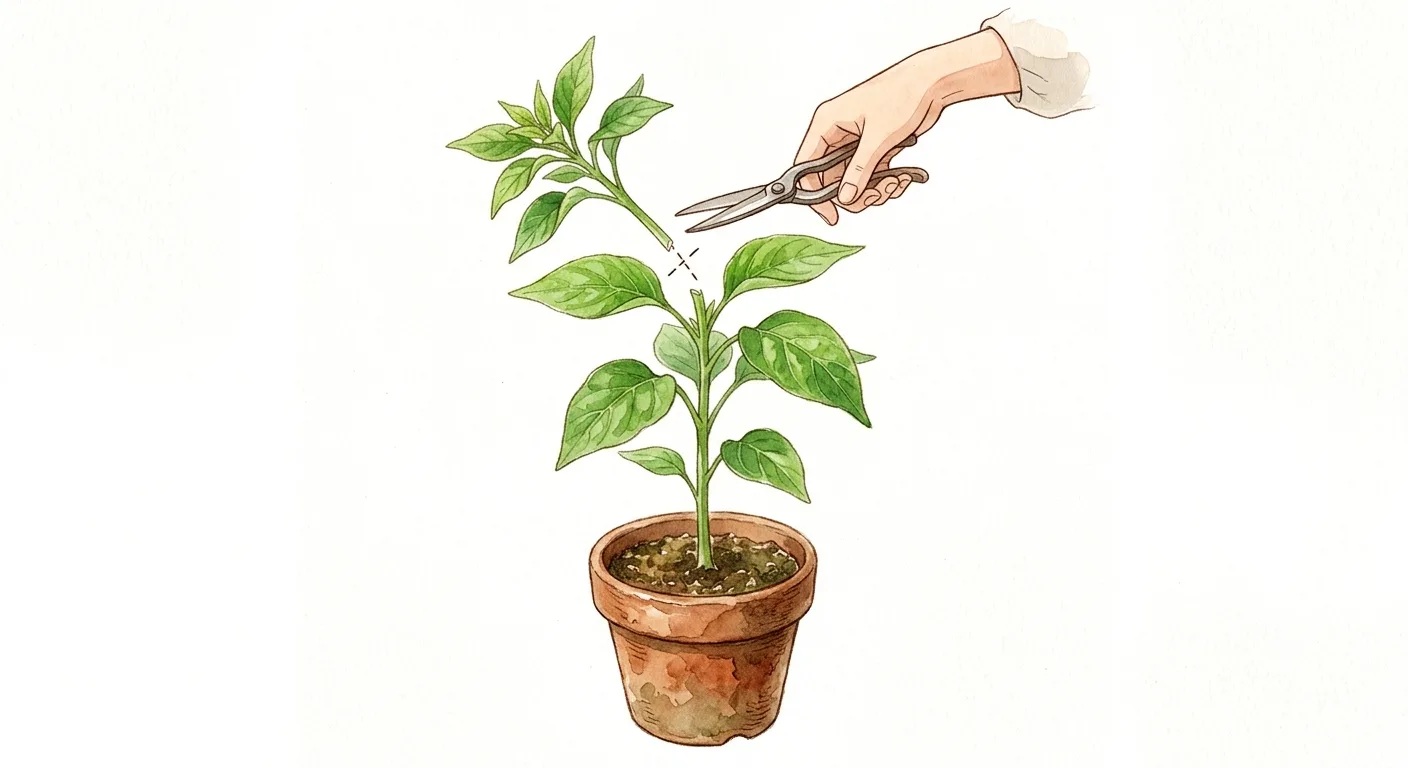
Topping: pinch out the growing tip above a node to push the plant into branching.
Topping means pinching out the very tip of the main stem while the plant is still young — usually once it has five or six true leaves and stands maybe 15–20 cm tall. Removing the growing point forces the plant to branch out from lower down instead of shooting straight up, so you end up with a shorter, bushier plant carrying more growing tips — and, since chilies fruit at branch forks, more potential fruiting sites.
The catch is in the timing, and it's the whole game. Topping sets the plant back by a couple of weeks while it rebuilds, so you're spending early-season time to buy late-season bushiness. Over a long, warm season — or under lights, or in a greenhouse — that's usually a good trade: the extra branches more than pay you back. In a short season, that fortnight is exactly the fortnight you can't afford, and a topped plant may never make up the ground before the cold arrives. If your summers are short, either skip topping entirely or do it early and only on fast, prolific types like a jalapeño, never on a slow, late variety like a habanero or a ghost pepper.
Removing the first flowers: roots before fruit
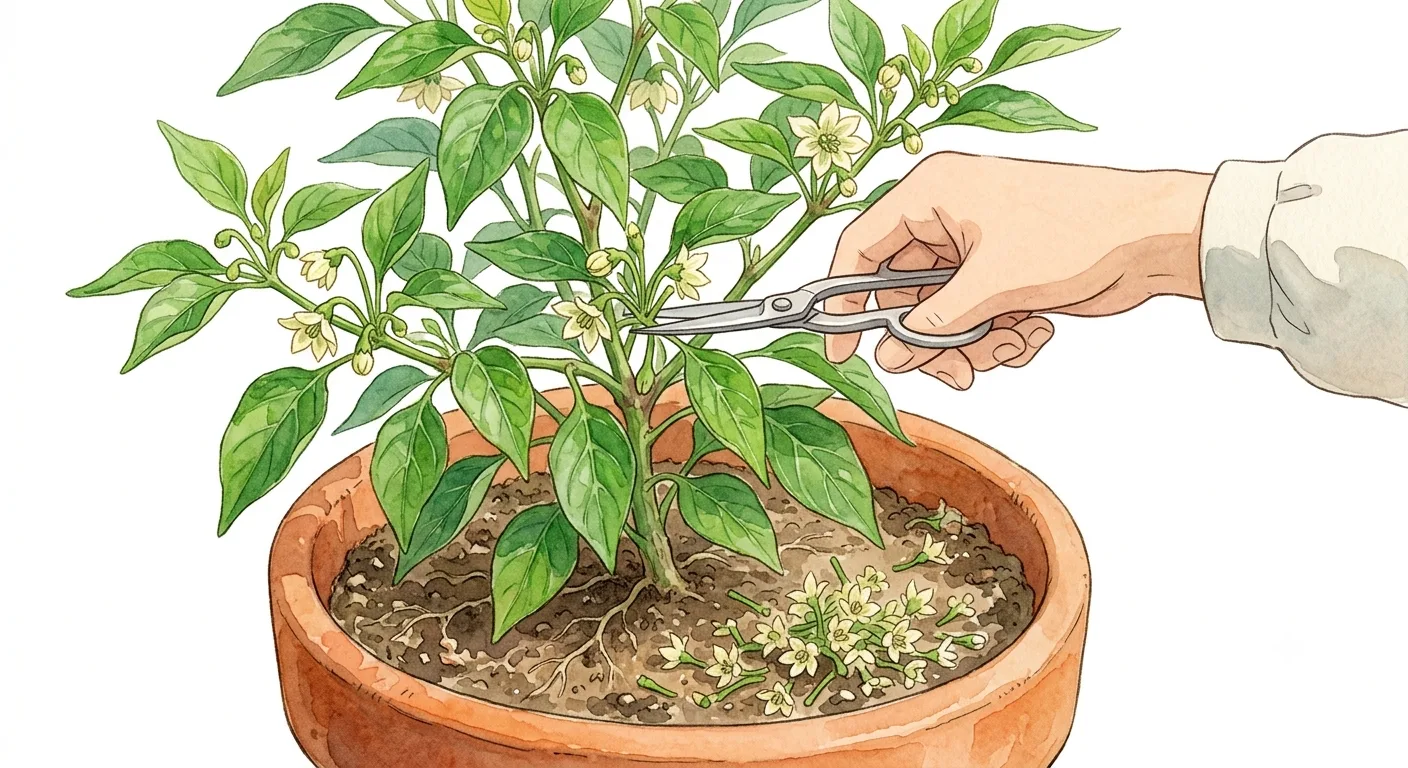
Early flower removal: strip the first buds so the plant builds roots and leaves first.
Young chili plants are often in a hurry to flower while they're still small — sometimes when they're barely more than a seedling in a small pot. The temptation is to celebrate. The argument for pinching those first buds off instead is that a plant pouring energy into a flower is a plant not pouring it into roots and leaves. Take the earliest flowers away and you steer that energy back into building a bigger, stronger frame first — which can carry far more fruit later than a plant that fruited too young and stalled out small.
This one is genuinely optional, and again it comes down to time. If you have a long season ahead, removing the first flush of flowers on an under-sized plant is a sound long-game move. If your season is short and the plant is already a decent size, don't bother — every flower you let stand is a head start toward a ripe pod, and you may need all of them. Never keep stripping flowers late into the season; past midsummer your job is to keep flowers, not remove them. When in doubt, browse the plant's own page in the catalog to see how long it typically takes to ripen — the slower the variety, the less you can afford to delay it.
Deleafing and airflow: a late-season tidy, not a haircut
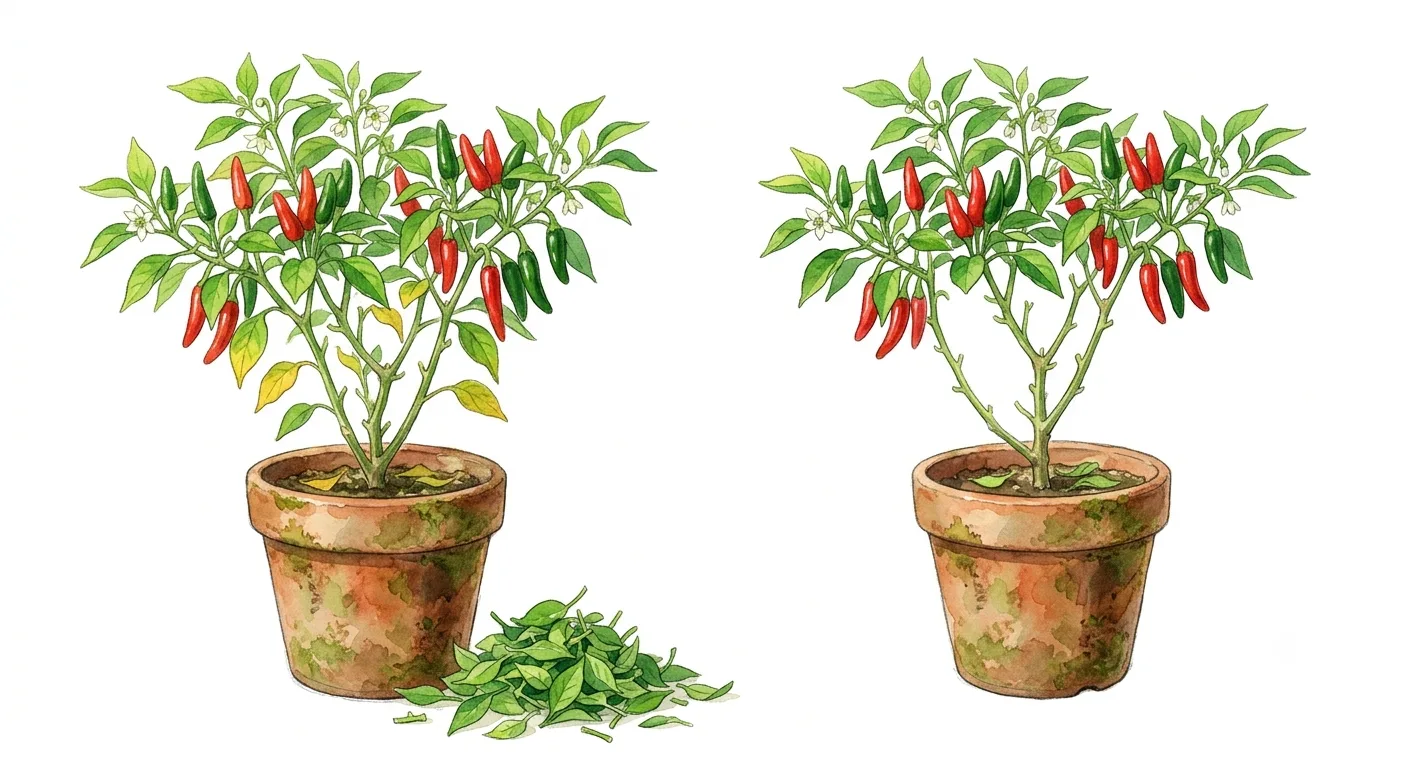
Deleafing: clear the lowest, shadiest leaves late in the season for airflow and ripening.
The last technique isn't about shape at all — it's about the end of the season, when the goal shifts from growing to ripening. As the plant matures, the lowest leaves are often shaded, tired, and sitting close to damp soil where they do little for the plant but plenty for fungal disease. Clearing those bottom and innermost leaves opens up airflow through the plant, lets light reach the ripening pods, and keeps foliage from staying wet after rain or watering — the conditions that invite rot and mildew.
Restraint is the whole point here. Leaves are the plant's engine; strip too many and you starve the very fruit you're trying to ripen. This is a light tidy of the lowest, shadiest, or clearly ailing leaves — not a haircut. Save it for late in the season when fruit is set and swelling and you're chasing colour before the cold, whether you're finishing off a rack of chilies or a few sweet peppers. Early in the season, leave the canopy alone — the plant needs every leaf it's got.
So, should you prune at all?
Often the honest answer is: only a little, or not yet. If you're growing in a short, cool season, the safest plan is to skip topping, leave the early flowers alone, and do nothing more than a light late-season deleaf to help the last pods ripen. If you've got a long, warm season, a greenhouse, or grow lights, that's when topping and early flower removal start to earn their keep — you have the weeks to spend and the plant will pay you back.
Whatever you decide, base it on your variety's real timeline, not a rule of thumb. Check ripening times in the catalog, and use the planner to see how much warm season you actually have where you garden before you take a single cut. Prune for a reason, at the right time, and the scissors help. Reach for them out of habit and they don't. Most seasons, the best pruning is the cut you decided not to make.
— Pernille
About the author
Pernille has spent almost her entire adult life working in gardens, both personally in her own gardens, as well as professionally. She has worked at Arley Hall & Gardens, at Systrarna Lindskogs in the Swedish riviera of Österlen and spends most of her waking hours planning gardens, counting seeds and thinking 3 seasons ahead (at least). She is also the founder and creator of Garden Kinship.
Continue reading
Growing Beans: Bush or Pole, Snap or Dry
Beans are the crop most likely to be called easy and most likely to be grown wrong. Almost every decision — where they go, what you feed them, when you pick — follows from two questions you answer before you sow: how tall does this one get, and are you eating the pod or the seed?
Pernille Roos · Jul 17, 2026
Your First Vegetable Garden: Start Smaller Than You Think
The most common way a first garden fails is being too big. Here is how to plant less, grow more, and actually enjoy your first season.
Pernille Roos · Jul 14, 2026
Growing Tomatoes: From First Sowing to the Last Ripe Fruit
Tomatoes are the crop most gardeners fall for first — and the one that most rewards getting the timing right. This is the whole arc: sowing, planting out, the one pruning decision that actually matters, keeping them fed and even, and coaxing the last fruit to colour before the cold.
Pernille Roos · Jul 14, 2026