
Leaf miners
Agromyzidae
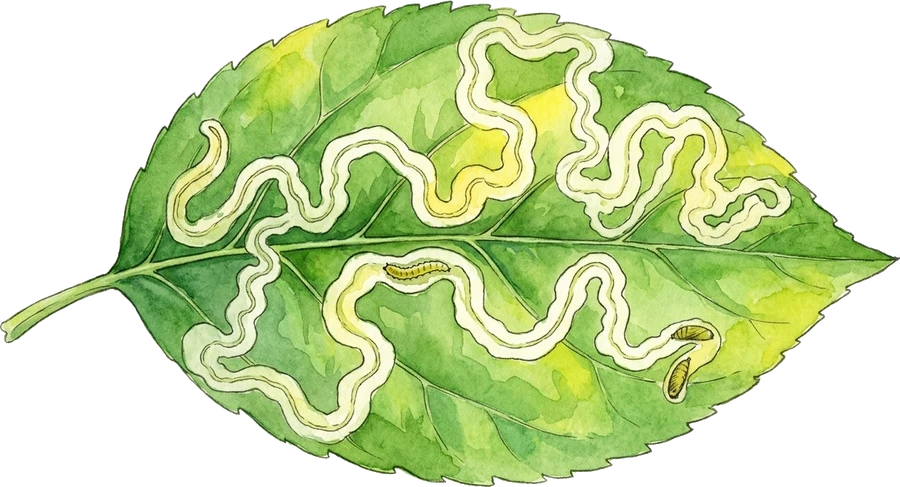
Pale trails inside the leaf — mostly harmless, and out of reach of any spray.

How to spot them
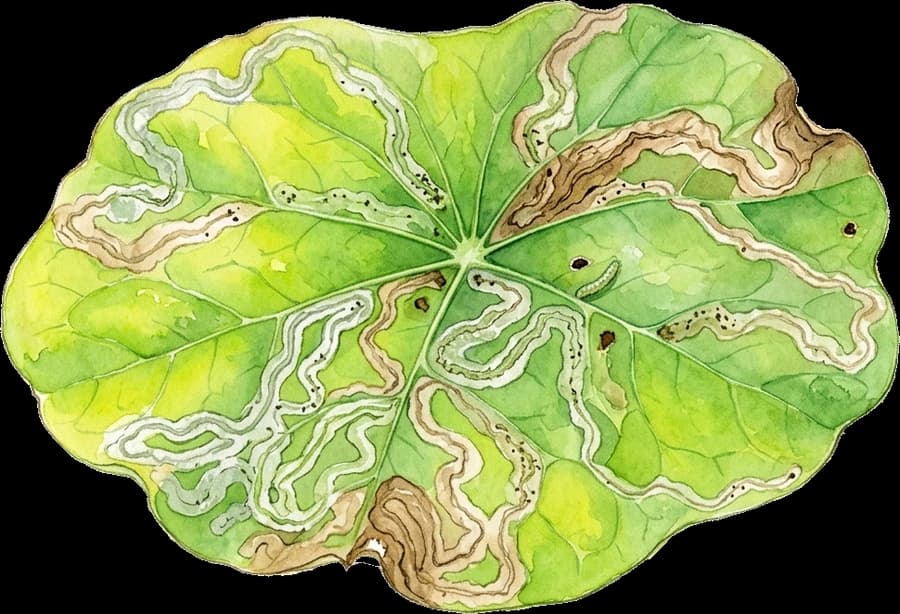
The mine is the diagnosis: twisting trails left by larvae feeding between the upper and lower leaf surfaces. On vegetables these are usually serpentine; on beetroot, chard and spinach beet the beet leaf miner makes large irregular blotches instead, and the mined tissue soon browns and shrivels.
A second, less-known symptom is white stippling — the punctures female flies make when feeding, which turn white and speckle the foliage.
The adults are small active black flies, often with a prominent yellow triangle; the larvae are yellow cylindrical maggots you will only see if you open a mine.
Beet leaf miner runs two or three generations between April and September.
Plants they attack
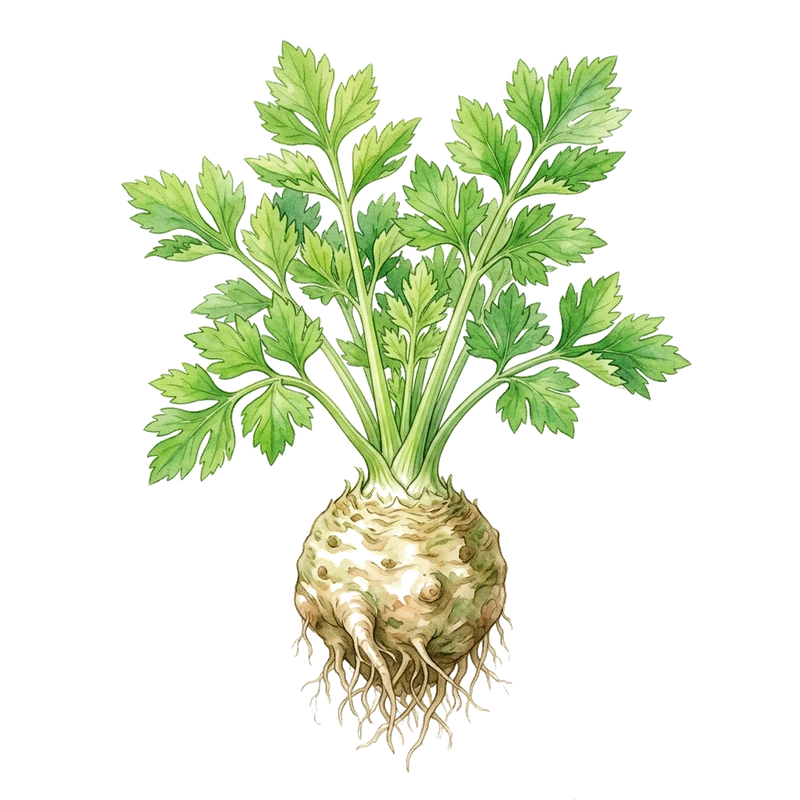
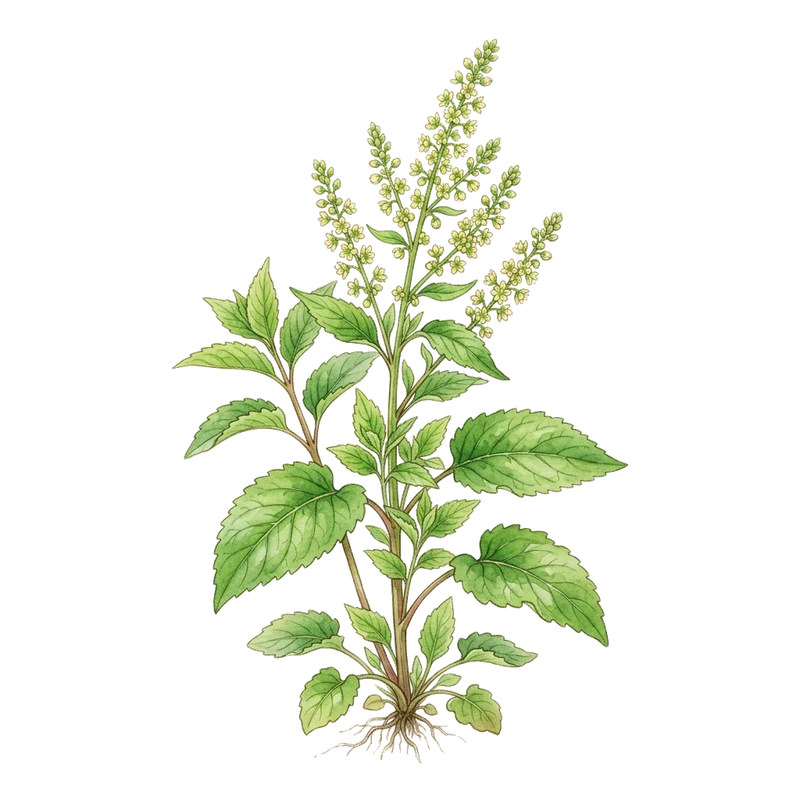
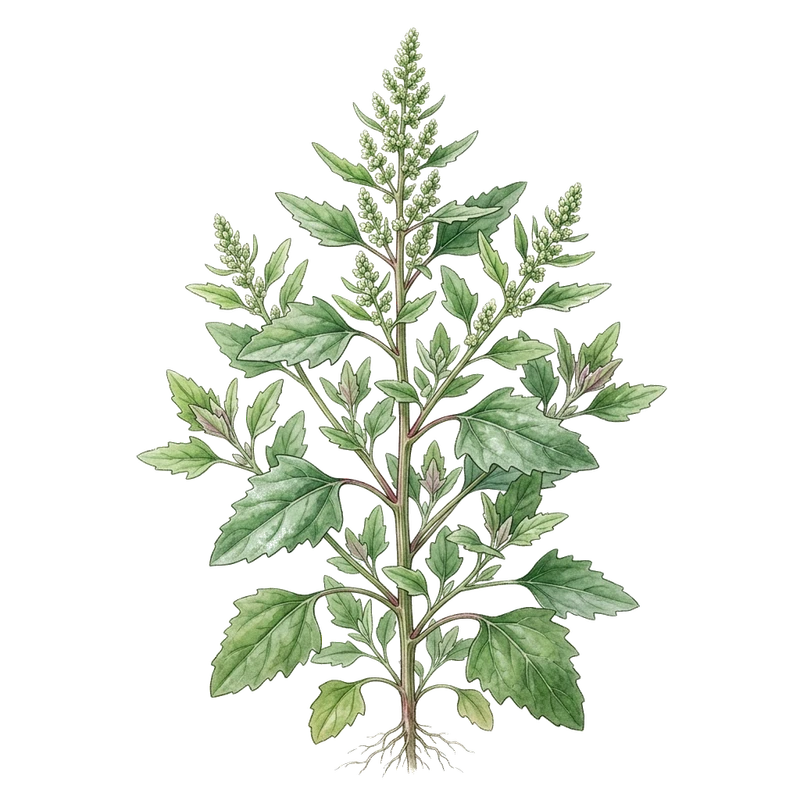
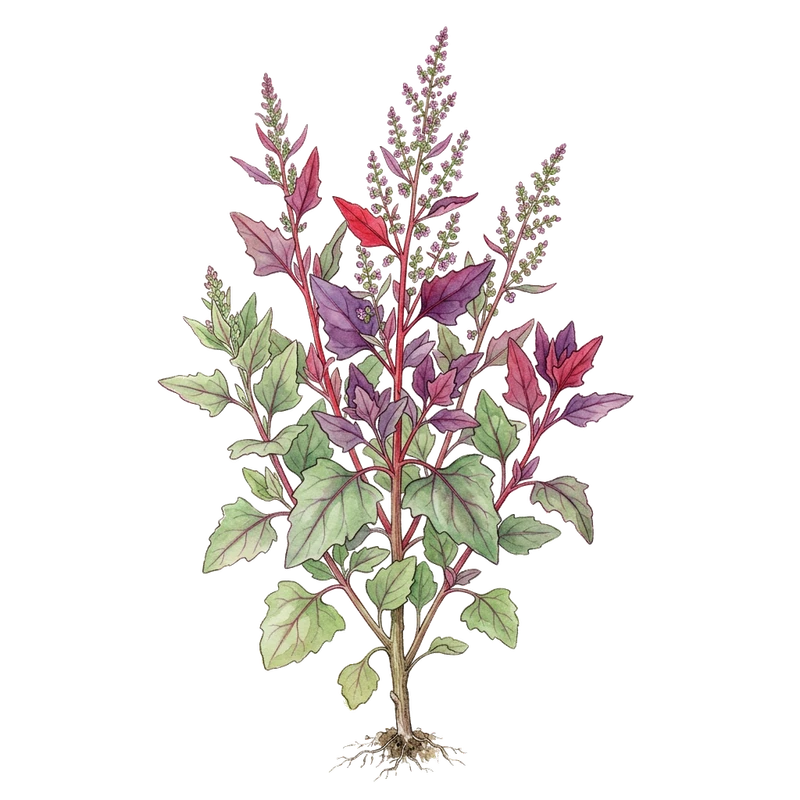
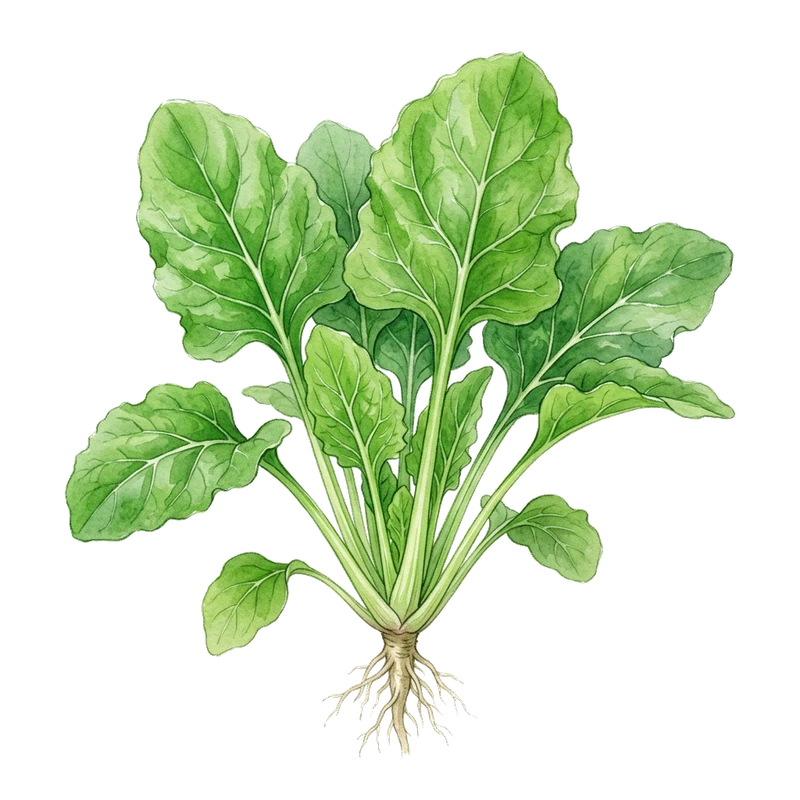
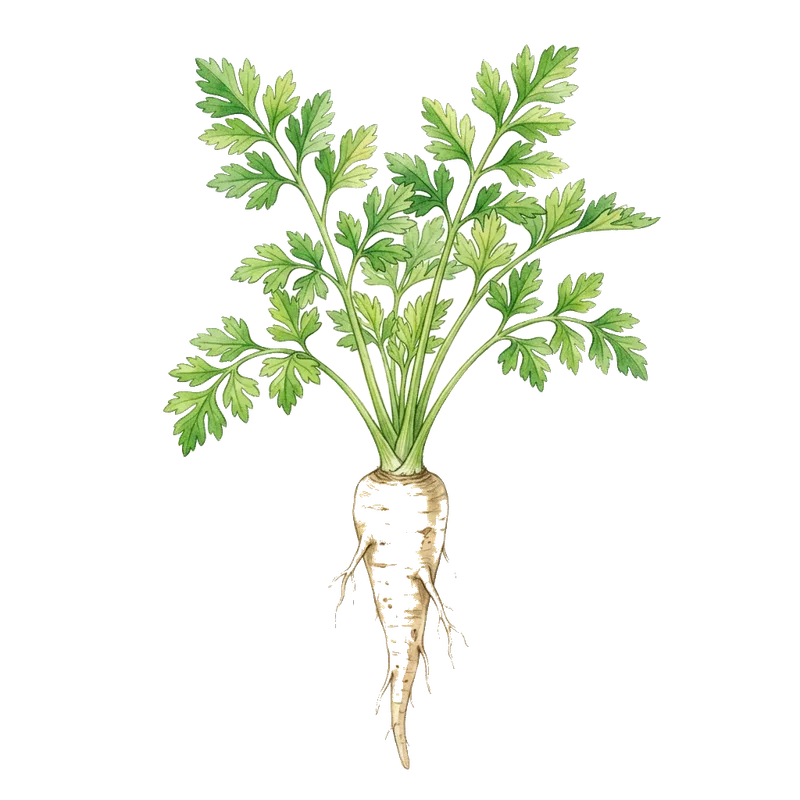
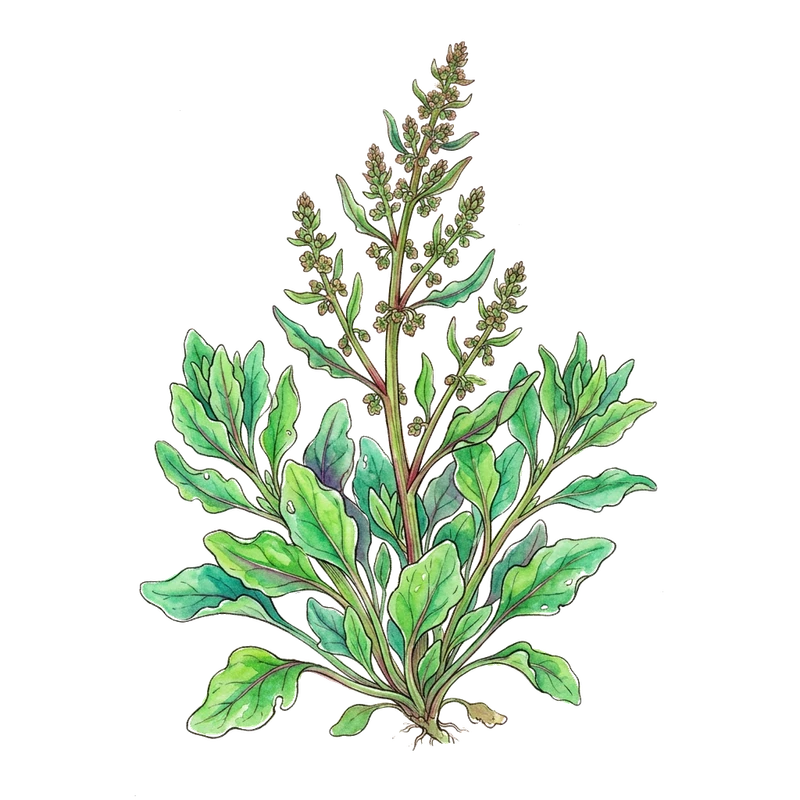
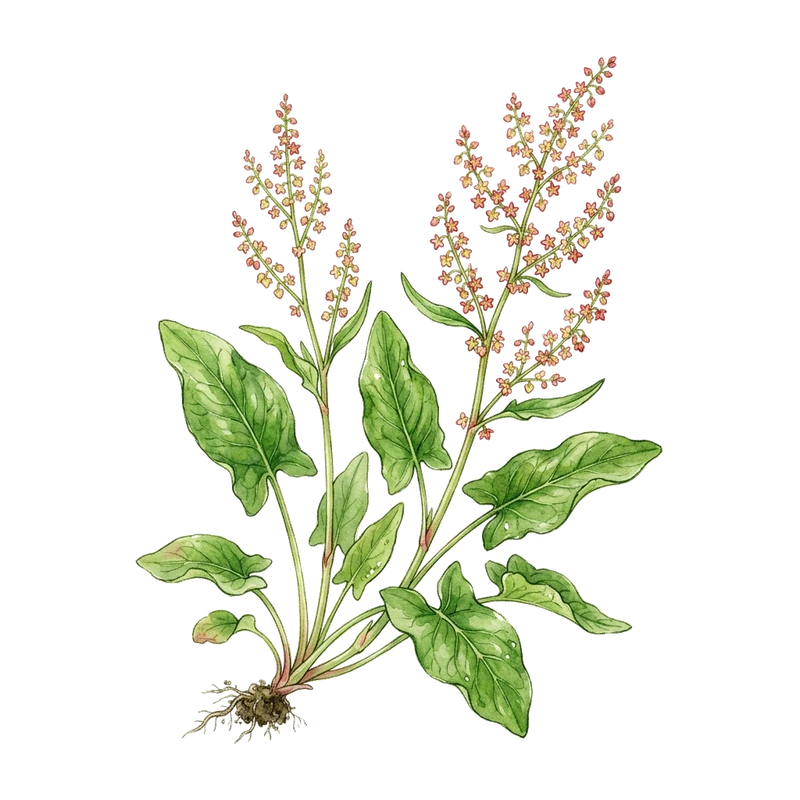
23 plants in our catalog are recorded as prone to Leaf miners. Click any of them to see what else it draws in.




What eats them
These are the predators that go after Leaf miners. Grow the plants that bring them in and they do the work for you.
Plan a garden that defends itself
Put the host crop and its predator plants in one plan and see when each one flowers.
Organic control
The headline from UC IPM is that leaf miners rarely require treatment in gardens at all.
Clip off and remove older infested leaves. On beet and chard you can also simply squeeze the mined area to crush the maggot inside.
Keep plants growing well, especially with irrigation — vigour matters more here than intervention.
Parasitic wasps, mainly in the genus Diglyphus, normally control leaf miners on their own.
Insect barrier netting stops the flies laying, but only works alongside crop rotation, since adults emerge from pupae that overwintered in the soil where the crop stood.
Insecticides are not very effective against leaf miners — the larva is inside the leaf, where sprays do not reach.