
Ground beetles
Carabidae
Night-active ground hunters, taking slugs, cutworms and leatherjackets at soil level.

What they are and what they do
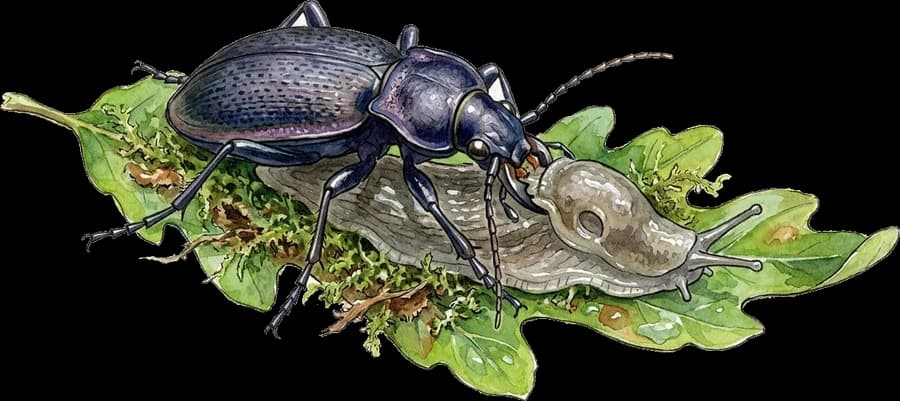
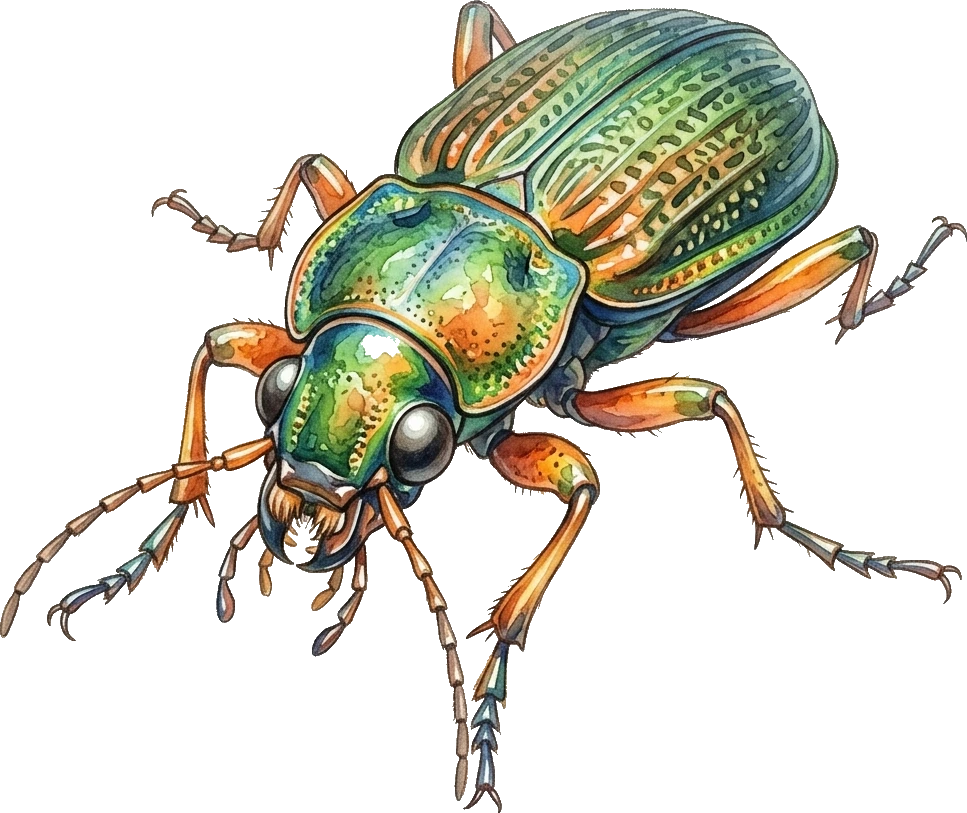
Elongate beetles with a hard, shiny upper surface, running from about 4 to 25 mm long. Most are blackish or dark reddish; some are brilliantly coloured or iridescent. Britain alone has around 350 species, of which the violet ground beetle is the one gardeners tend to recognise — 20 to 25 mm, with metallic-purple edges to the wing cases and thorax.
The prey list is the reason this page exists. UC IPM records caterpillars, root-feeding insects, soil-dwelling insects and other ground-dwelling invertebrates including millipedes, slugs and snails. The RHS names the same ground-level menu — slugs, leatherjackets, cutworms and other caterpillars — and notes that some species will climb plants to take aphids and small caterpillars.
Both stages hunt. The larva is elongate, relatively soft-bodied, with three pairs of legs near the head end, and it lives in the organic litter on the ground or in the topsoil, feeding on invertebrates and eggs. Adults are mostly night-active ground-dwellers, which is why the thing eating your slugs is almost never present when you go looking for it.
They are in it for the long haul, unlike the aphid predators. A female lays about 100 or more eggs across her life, the larva passes through four increasingly large instars, and development from egg to adult takes several months to more than a year — many species take about a year. Adults can live two or more years.
Pests they keep in check
- 224 plants in our catalog are prone to it
- 49 plants in our catalog are prone to it
- 32 plants in our catalog are prone to it
- 27 plants in our catalog are prone to it
- Colorado potato beetle1 plant in our catalog is prone to it

Plan a garden that feeds them
Drop these plants into a plan and see how the season lines up — the predators need their food and their cover in place before the pests arrive.
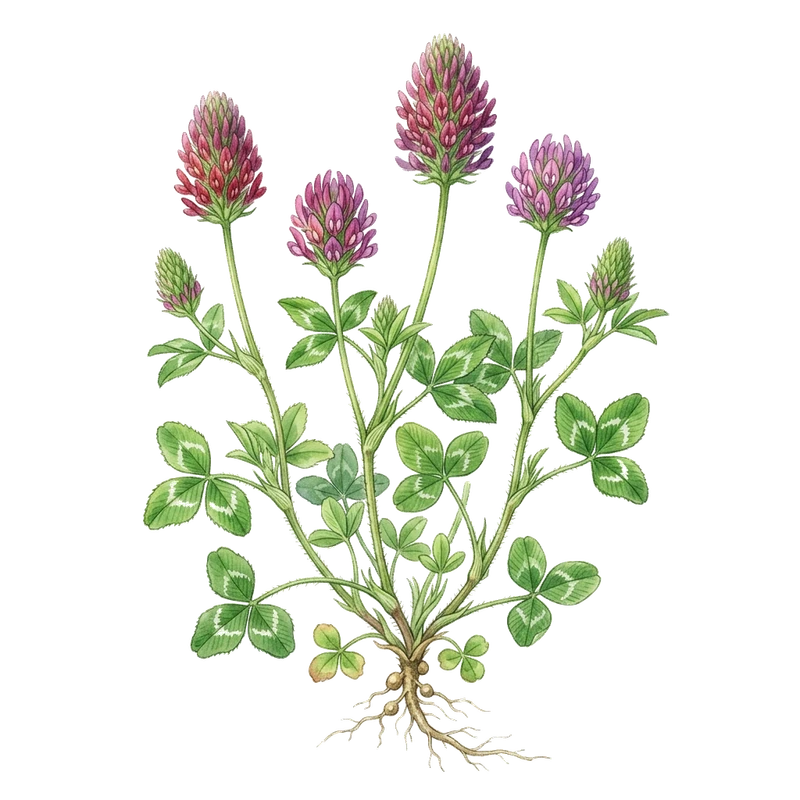
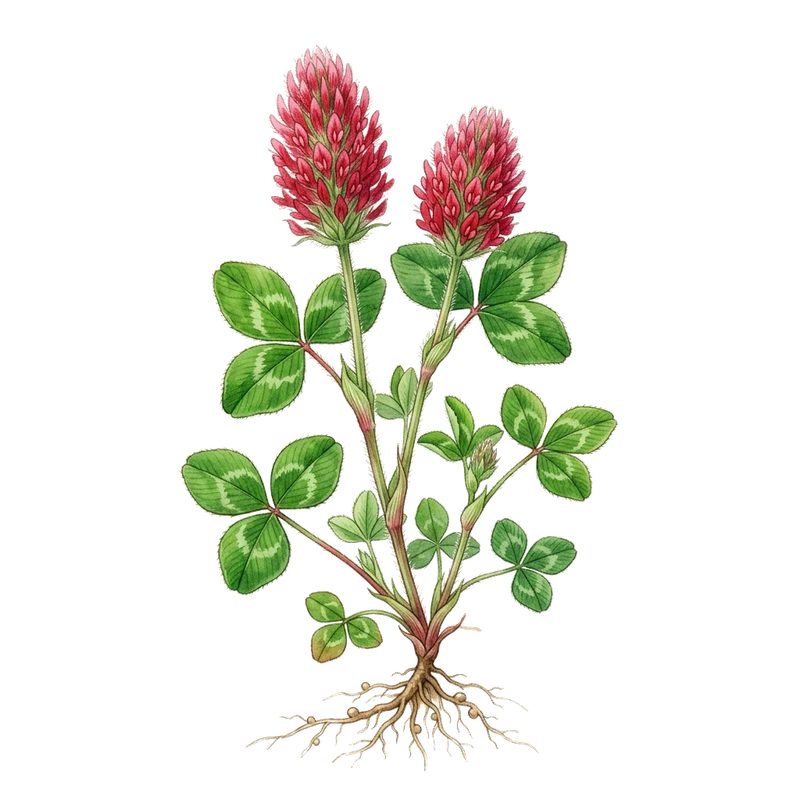
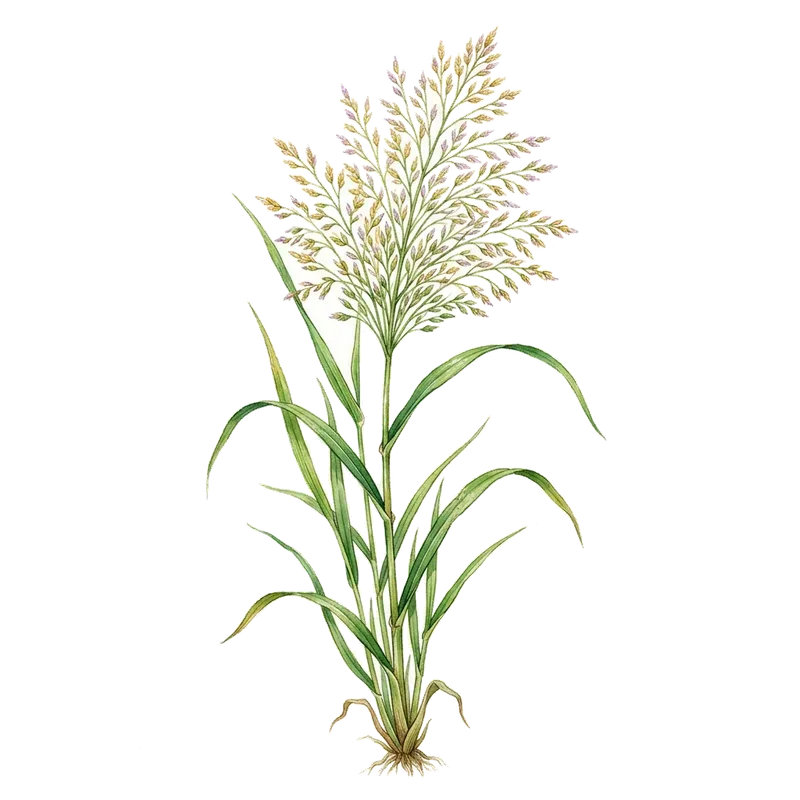
Plants that attract Ground beetles
17 plants in our catalog draw Ground beetles in. Grow a few of them near the crops you want protected.


How not to kill them
Here is the honest tension, and it is worth naming: UC IPM records that adults shelter by day in compost piles, leaf litter, mulch and under objects on the soil and rocks, especially in moist locations — which is very close to the advice for clearing slug hiding places. Removing every board, stone and leafy corner takes the predator out along with the pest. Keep the shelter, and move the beer traps and torchlight searches to the front of your slug plan instead.
Leave the litter layer alone where you can. The larvae live in that litter and in the topsoil, so a bed dug over and raked bare every autumn is a bed with nowhere for the next generation to develop.
Skip the broad-spectrum insecticides. UC IPM warns off broad-spectrum, persistent products for all pests because they are toxic to natural enemies, and a ground-dwelling beetle sits in exactly the drench and drift zone those products reach.
Getting them through the winter
There is no single stage to plan around, and the sources do not pretend otherwise. UC IPM gives no overwintering stage for the group, and with a life cycle that can run past a year and adults living two or more, both adults and larvae are around through the cold months. The RHS puts peak adult activity at March to October — the rest of the year they are under something.
So the practice is simple and it is the same practice all year: give them cover. The RHS recommendation is wood piles, compost heaps, and leaving some leaf litter in the garden borders. Permanent ground cover and mulched beds do the same job across a much wider area than a single log pile can.