

Lacewings
Chrysopidae
Golden-eyed adults that mostly drink; larvae that hunt like small alligators.

What they are and what they do
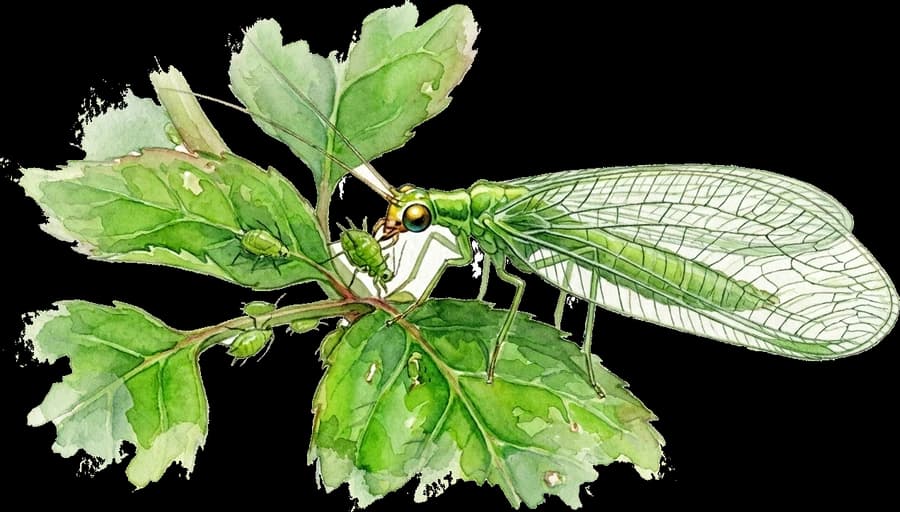
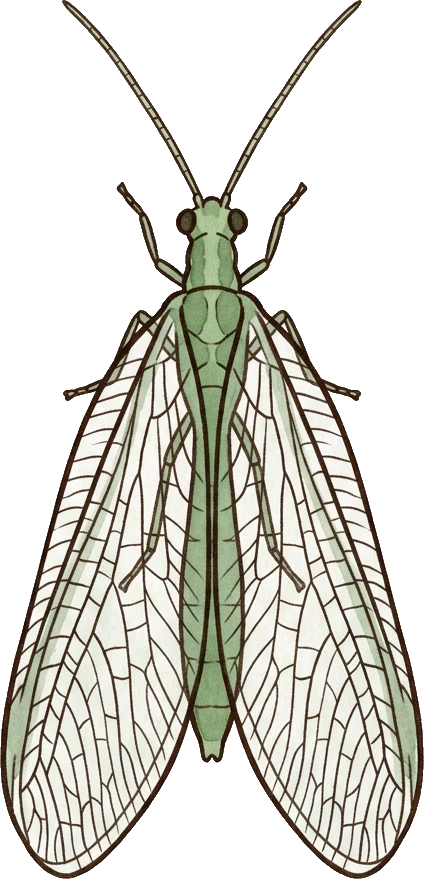
Adult green lacewings are pale green, roughly 12–20 mm, with long antennae and bright golden eyes. What they eat depends on the genus, and this is the fact most gardening writing gets wrong: adults feed on honeydew, plant nectar and yeasts, and while Chrysopa species are additionally predatory, the very common Chrysoperla species are not.
The larva is the hunter in either case — elongated, flattened, distinctly legged, and, like a ladybird larva, often described as a tiny alligator. It impales prey on sharp mouthparts and sucks out the contents, taking aphids, thrips, mites and other small insects. Cornell puts consumption at between 100 and 600 aphids each.
The eggs are unmistakable once you know them: each sits on the end of its own silken stalk attached to the plant. The pupa is a roundish cocoon about 3–6 mm across.
Pests they keep in check
- 537 plants in our catalog are prone to it
- 176 plants in our catalog are prone to it
- 152 plants in our catalog are prone to it
- 148 plants in our catalog are prone to it
Plan a garden that feeds them
Drop these plants into a plan and see how the season lines up — the predators need their food and their cover in place before the pests arrive.
Plants that attract Lacewings
49 plants in our catalog draw Lacewings in. Grow a few of them near the crops you want protected.











How not to kill them
UC IPM’s instruction is explicit: avoid the use of broad-spectrum and persistent insecticides and miticides.
Feed the adults. Since most of them live on nectar and pollen rather than prey, flowering plants are not decoration here — they are what keeps the egg-laying going.
Getting them through the winter
Sources genuinely disagree, so leave more than one kind of shelter rather than optimising for one stage. UC IPM finds that in cold-winter regions overwintering is mostly as prepupae or pupae in silken cocoons tucked into bark crevices; Cornell reports that the two commonest green lacewings overwinter as adults in leaf litter.
In practice that means bark, leaf litter and evergreen shrubs — the RHS lists crevices, leaf litter and evergreens as hibernation sites. Leaving those undisturbed covers whichever stage your lacewings actually use.